Stem cell injections for the shoulder, inside a real hospital.
The cortisone wore off. The PRP didn't hold. Now a surgeon says repair the cuff, or replace the joint. Before you book the operating room, the physician team at Hospital Angeles in Tijuana, Mexico, 25 to 30 minutes from San Diego, reviews your imaging, your reports, and your symptoms, then tells you plainly whether cell therapy fits your shoulder. One treatment day. Over the border and back, most patients home the same day.
A patient coordinator typically calls within 1 business day. About 15 minutes, no cost, no obligation.
Medically reviewed by the physician team at Hospital Angeles · June 2026
Ultrasound or fluoroscopy
The rotator cuff is a moving soft-tissue target. The needle and the cells leaving it are watched live, at the tendon, before and during release.
Calls, not return trips
A call at 1 week, then at 1, 3 and 6 months, then once a year. Your patient coordinator or aftercare specialist, by phone or video, asking how the shoulder is actually behaving. A physician joins when needed.
Who qualifies for stem cells in the shoulder.
You were handed one option and told to schedule it. Bring us whatever that decision was based on. The shoulder is mostly soft tissue, so the question is rarely how much cartilage is left. It is how thick the rotator cuff still is, and whether the tendon has pulled away from the bone. Four profiles, starting with the one we turn away.
Not a fit
Surgery is the right tool.
Retracted full-thickness tears and massive cuff failure. Once the tendon has pulled off its footprint, cells will not reattach it. We say so before any quote.
Not first-line
Frozen shoulder.
Adhesive capsulitis is a capsular inflammation process, not a tendon or cartilage problem, and cell therapy is not the first-line answer for it. We say so and refer you.
Also a fit
Shoulder arthritis, labral fraying, a shoulder that never settled after surgery.
Early to moderate glenohumeral osteoarthritis (the ball-and-socket joint) with the socket intact and the cuff working, labral fraying, and post-arthroscopy shoulders that have plateaued. Grade IV with bone loss is case by case, after a frank forecast.
Strong fit
Partial cuff tears and a worn tendon.
Partial-thickness tears under about half the tendon's depth, chronic cuff tendinopathy (a worn, painful tendon), and impingement that PT, cortisone, or PRP has not settled. The profile we accept most often.
Shoulder injections under live imaging.
A stem cell shoulder injection at Celva is placed under live imaging: ultrasound or fluoroscopy. The rotator cuff is a soft-tissue target a few millimeters thick, and it moves. Ultrasound shows the tendon, the needle tip, and the cells leaving the needle in real time.
Three cell types, matched to your shoulder.
Bone-marrow and umbilical-cord MSCs (mesenchymal stem cells), sometimes with chondrocytes (cartilage cells) when the joint surface is part of the picture. Allogeneic (from a screened donor; no harvest procedure for you), grown in the on-site cGMP-compliant lab, released after 6 lab tests: sterility, identity, viability, potency, endotoxin, mycoplasma. At least 95% viable at infusion.
At the tendon, in view.
Depending on your imaging, cells go to the cuff footprint (where the tendon meets the bone), into the glenohumeral joint (the ball and socket), or into the subacromial space above the cuff. Each placement is confirmed on screen before the physician releases the dose.
Local anesthetic, 15 to 30 minutes.
Local anesthetic, with twilight sedation available if you want it, and Dr. Rocio Ambrosio Nuño, anesthesiology, in the room. No general anesthesia. A still shoulder lets the physician reach the footprint and place the full dose. Expect soreness at the site for 24 to 72 hours.
Dr. Cesar Amescua, Medical Director, and Dr. Alejandro Castillo, interventional radiology, decide which cells, what dose, and which targets from your imaging. Paracrine signaling (the cells' chemical messaging to nearby tissue) works over weeks to months.
Rotator cuff tears: partial vs retracted.
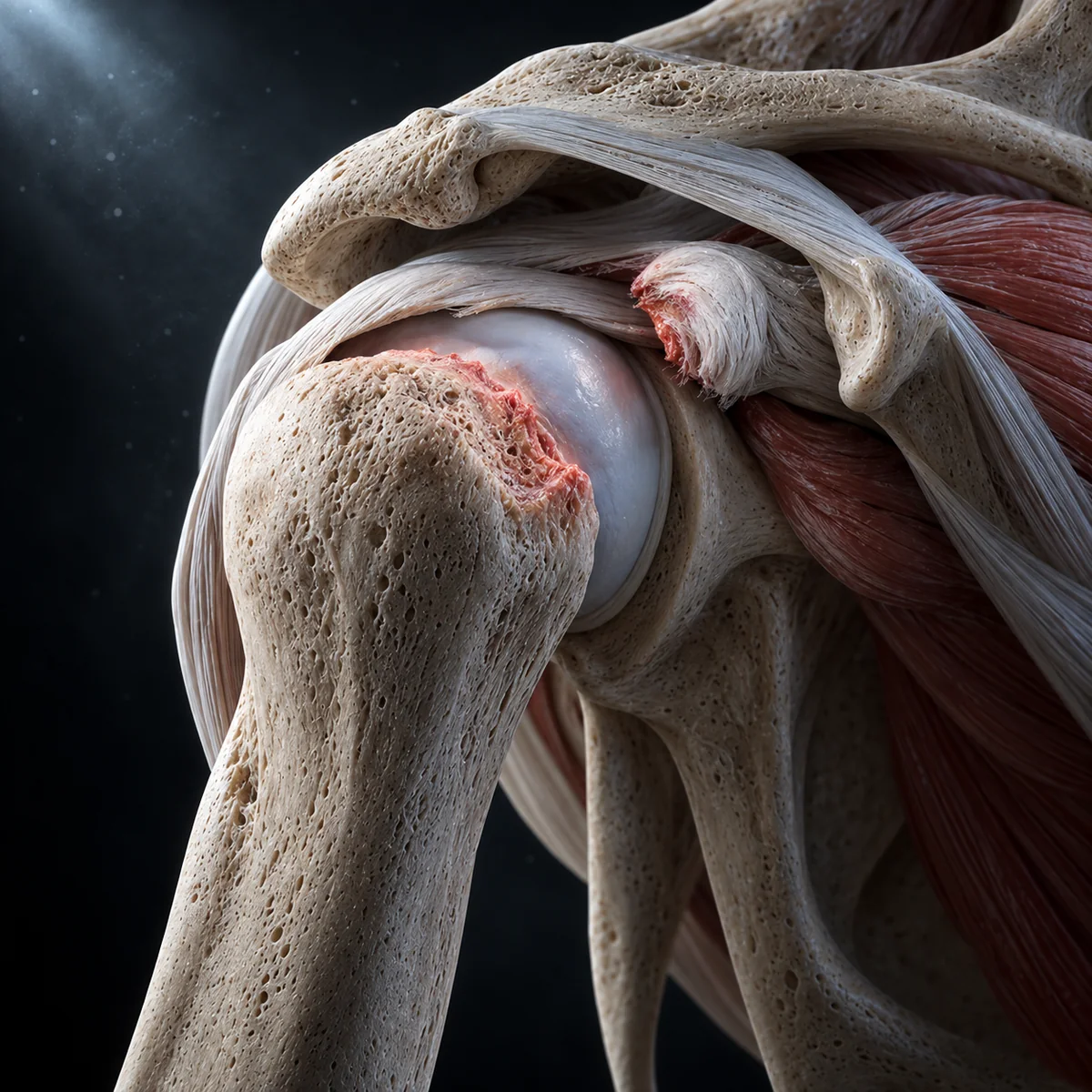
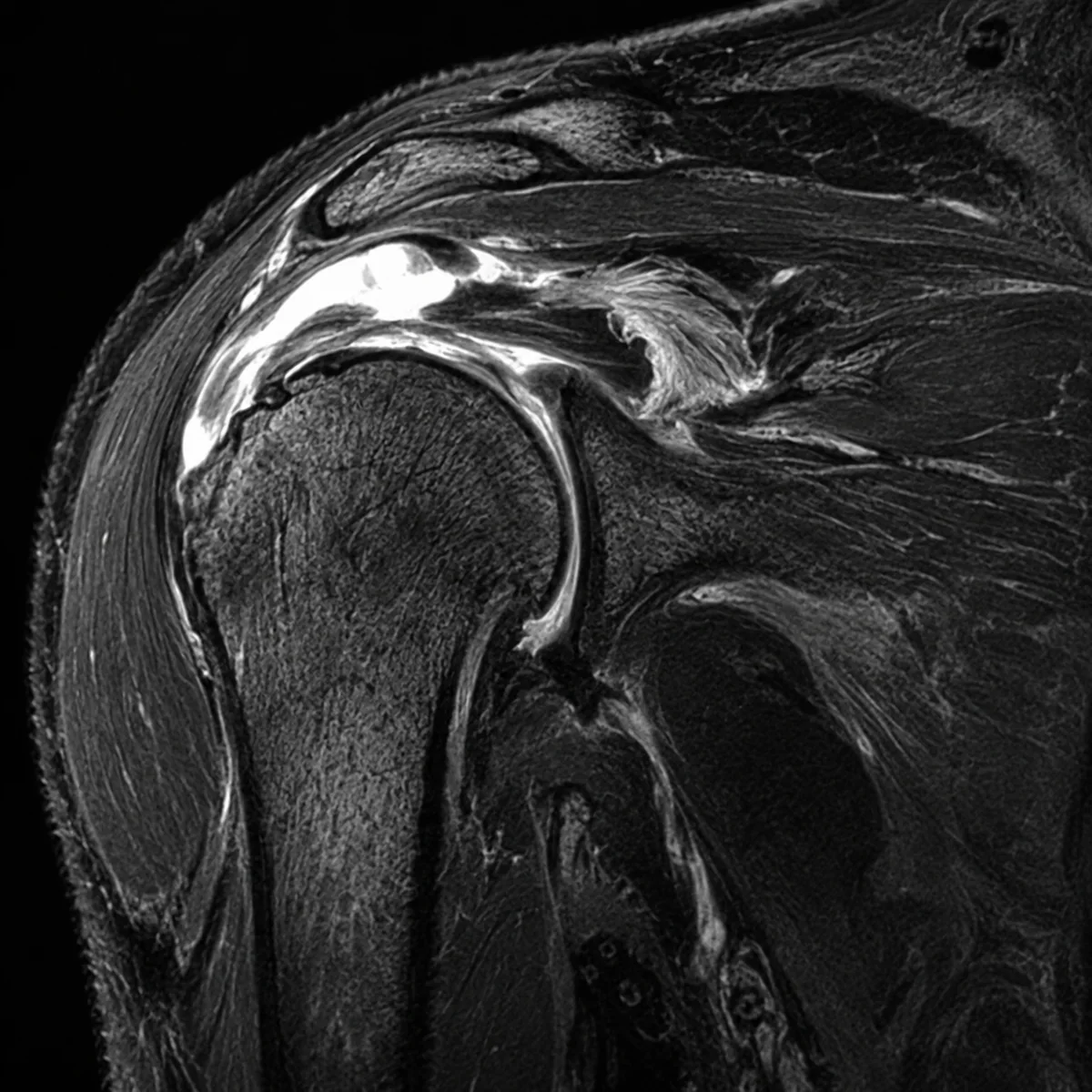
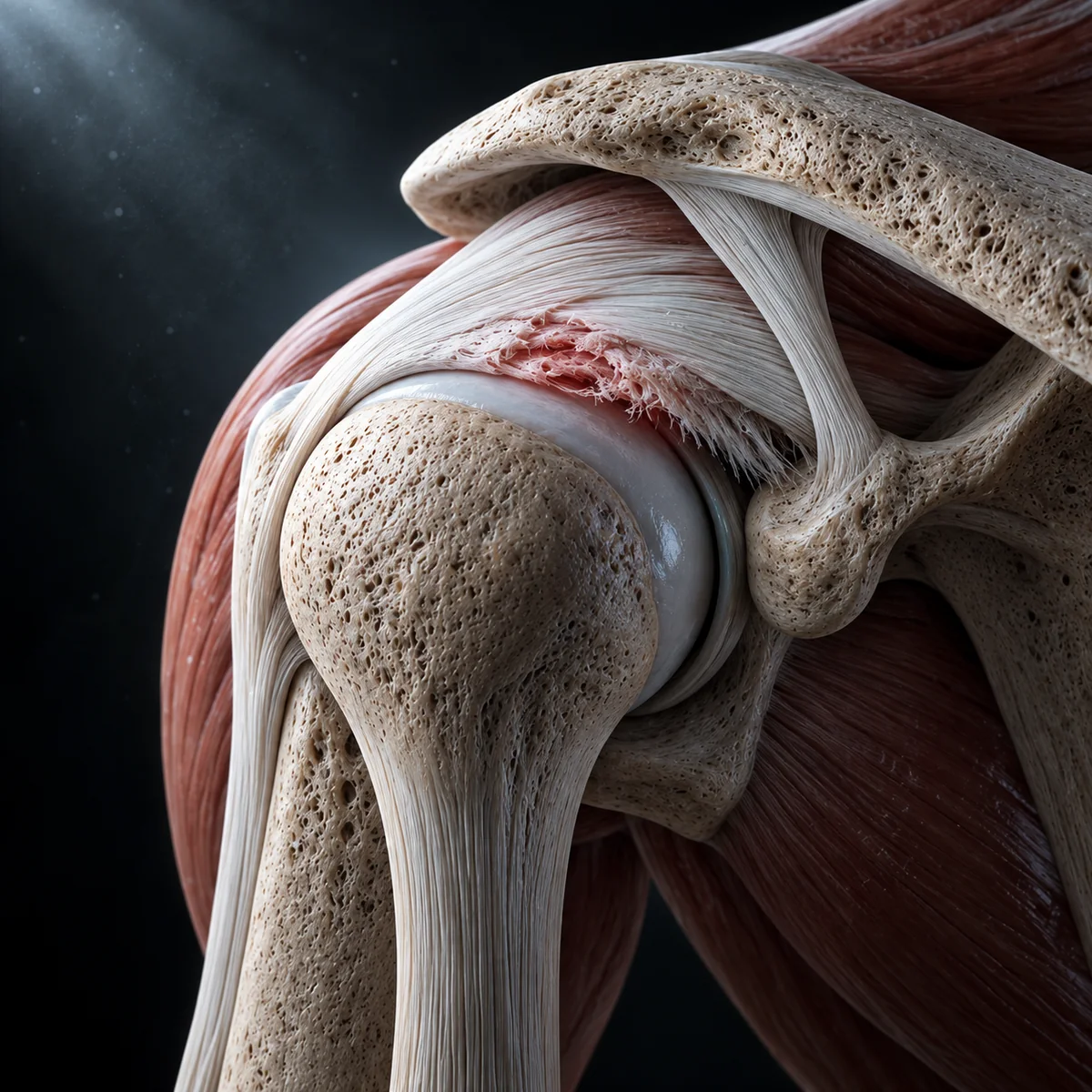
Two words on your MRI report decide more than anything else on this page: whether the rotator cuff tear is partial or full-thickness, and if full-thickness, whether the tendon has retracted (pulled away from the bone).
A retracted full-thickness tear
Surgery is the right tool
- The tendon has pulled off its footprint. Cells will not reattach it.
- Massive tear patterns need surgical reattachment.
- We say so before any quote, and we will recommend a surgeon we trust.
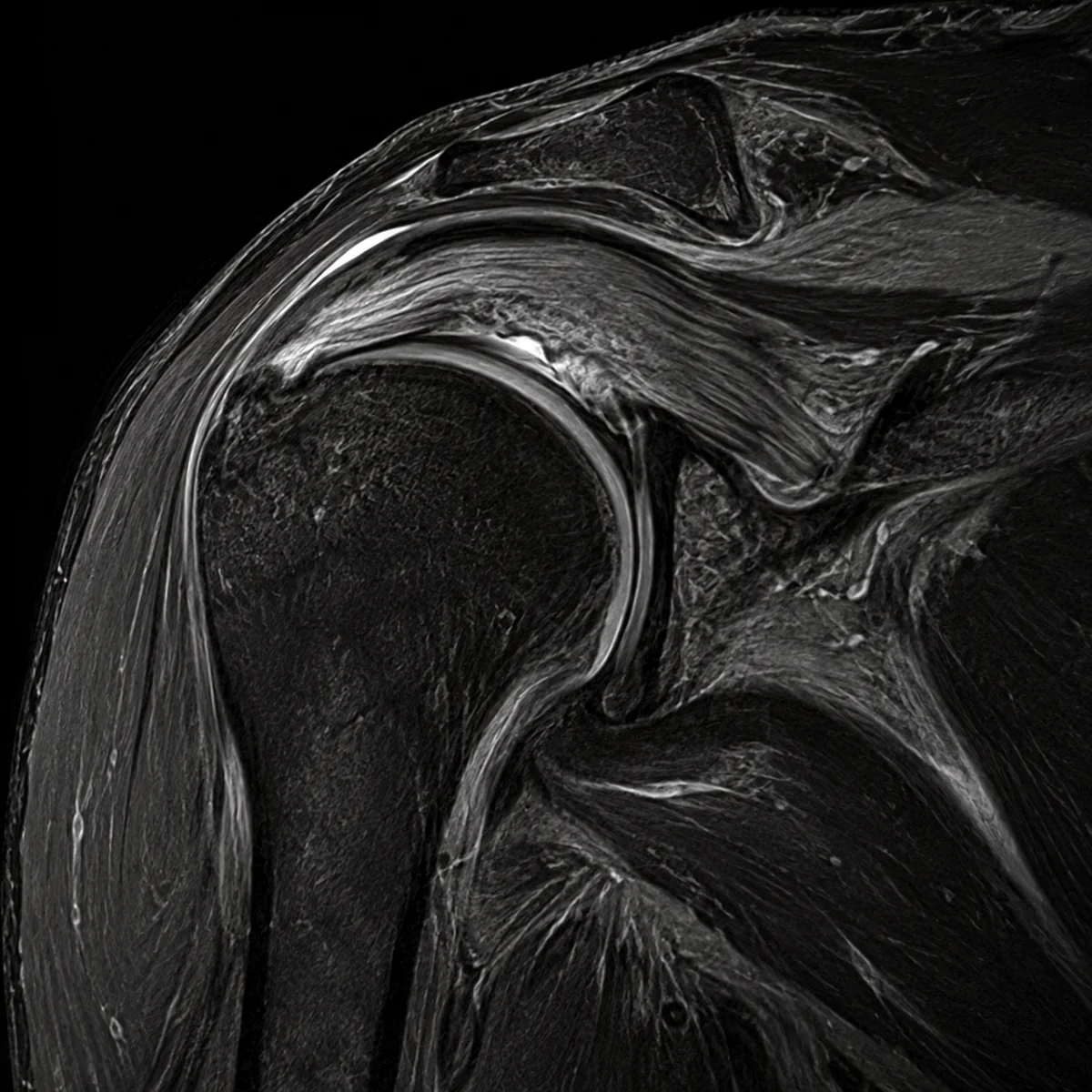
A partial tear or a worn tendon
Offered for a cuff with tendon left to work with
- Partial-thickness tears under about half the tendon's depth.
- Chronic cuff tendinopathy and impingement that PT, cortisone, or PRP has not settled.
- Cells placed at the footprint under live imaging. 1 treatment day inside Hospital Angeles, Tijuana, with check-in calls from home at 1 week, then at 1, 3 and 6 months, then once a year.
- Designed to support the tendon's own repair process. No outcome is promised.
Which one you have is decided from your imaging and the physician team's read, not from how the shoulder feels.
Stem cells vs shoulder surgery.
"The other doctors told me that after physical therapy, if that didn't work for me, they only suggested surgery."Kathie M., Celva knee patient
For the shoulder, surgery means one of two operations: a cuff repair, which reattaches a tendon that has retracted, or a joint replacement, for a ball and socket that has run out of cartilage. If your imaging shows either, that is what you will hear from us.
Stem cells are offered for the shoulder that has not run out: a partial tear, a worn cuff, early to moderate arthritis with the socket intact and the cuff still working. Bring your surgeon's recommendation to the call.
What a shoulder case costs.
If you came here for a price, it is not on this page, and here is why: a clinic that quotes you one before reading your imaging is guessing. Three things set your number. The written quote states which cells, how many, and the hospital they are delivered in.
Cell type and dose
Which cells, and how many.
Set from your imaging, and re-checked alive the morning you are treated.
One shoulder or both
Treated in the same day.
Two shoulders means more physician time and a larger total dose.
Follow-up
Inside the quote.
1 treatment day. Then calls at 1 week, at 1, 3 and 6 months, and once a year after that. Not a plan you buy afterward.
Cell therapy is not FDA-approved for these uses in the United States and is not covered by US insurers; patients pay directly. HSA and FSA eligibility depends on your plan.
What the day looks like.
Most patients are home the same day. Work backward from there: about 4 hours at the hospital, 15 to 30 minutes of it on the table, a 25 to 30 minute drive from San Diego, and a call with a coordinator before any of it.
-
Reviewed first
Before you travel.
A coordinator gathers your imaging, reports, and symptoms; the physician team reads them and says whether cells fit your shoulder. No MRI needed to start.
-
Picked up
Anywhere in Southern California.
25 to 30 minutes from San Diego to Hospital Angeles, Tijuana, a 116-bed private hospital in the Angeles Health network. 1 or 2 companions can be with you all day.
-
Treated
15 to 30 minutes on the table.
If a scan is missing, imaging is on site with the report the same day. Then the injection under live imaging, under local anesthetic, with twilight sedation available if you want it. Almost every joint and spine patient also receives a systemic IV the same day.
-
Home
Most patients, the same day.
A companion is welcome, never required: the Celva driver takes you home. Walking and light daily use are fine; protect the shoulder for the first 7 to 10 days, then physical therapy. Check-ins happen by phone or video, so this is the only trip unless a follow-up review says a second treatment makes sense.
The people we said yes to.
Five real Celva patients, in their own words. No scripts. Individual results vary.
Common questions about stem cells for the shoulder.
Plain answers. Not reassurances.
Can stem cells be used for a rotator cuff tear, or does it need surgery?
Do I need an MRI before we talk?
Does the shoulder injection hurt?
How many treatments will I need, and do I have to keep coming back to Mexico?
When can I lift and work overhead again?
The physician team. Your shoulder. A straight answer.
Your first call is with a Celva patient coordinator, about 15 minutes, who collects your case for the physician team's independent review. Then you hear it plainly: candidate or not. Nothing to commit to on the call. Have your imaging or reports ready.
These therapies are not FDA-approved. Treatments are performed in Mexico by licensed physicians in a hospital setting. Individual results may vary. Not medical advice.