Stem cells vs a knee replacement: what each one is, and who each one is for.

You're probably reading this with a surgeon's recommendation in hand. Below: what each one does, side by side, and the line between the knees that suit each. Celva treats inside Hospital Angeles, Tijuana, 25 to 30 minutes from San Diego, and declines the knees where surgery is the right tool.

Two different jobs, on two different knees.

A replacement removes the worn joint and replaces it. An image-guided cell injection leaves the joint in place and treats it. Each is built for a range of knee the other is not. Read your own X-ray report against both columns.
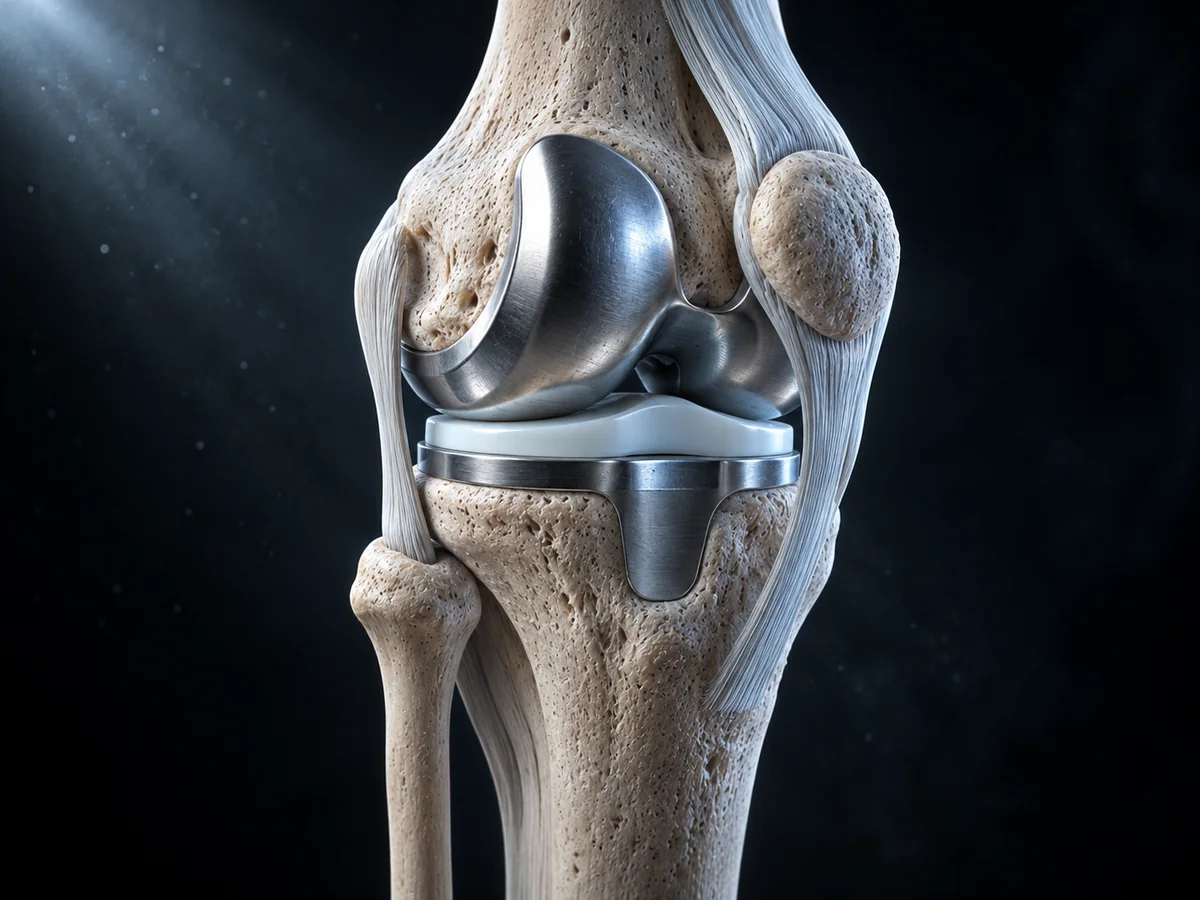
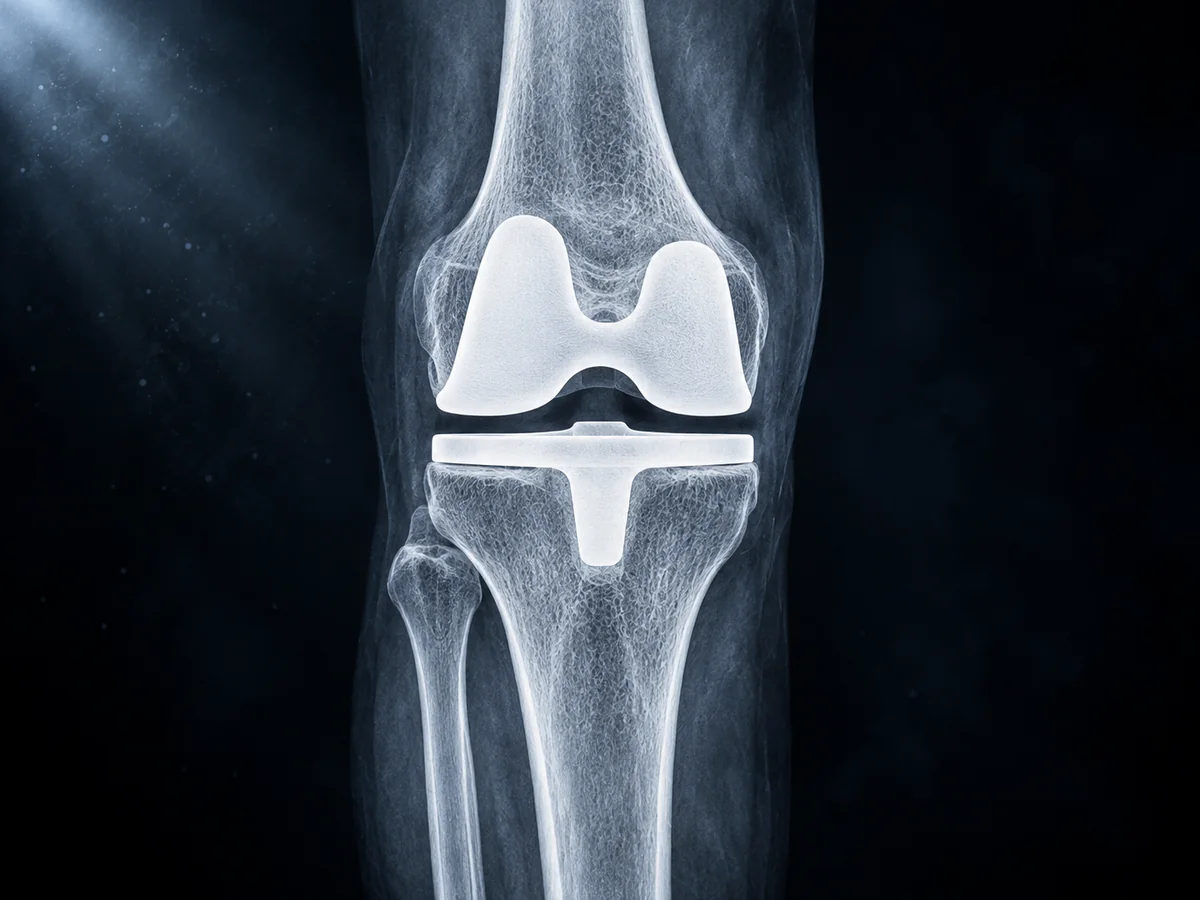
A 3D illustration of a knee after total replacement: a metal component caps the end of the thigh bone and a metal tray with a plastic spacer is seated on the shin bone. A front-on X-ray after knee replacement, the metal components bright against the bone. Knee with implantAfter replacement · X-ray
A total knee replacement

The worn joint comes out.

  • What is done The worn ends of the thigh bone and shin bone are cut away and capped with metal and plastic components. The joint surface you were born with is gone, by design.
  • Where A hospital operating room, followed by a stay that typically runs from 1 night to several.
  • Time on the table The operation itself typically takes 1 to 2 hours.
  • Anesthesia General or spinal anesthesia, with an anesthesiologist for the whole procedure.
  • Recovery Walking with support within a day or two, weeks of physical therapy, and typically 3 to 6 months before most daily activity feels normal.
  • Who it suits Kellgren-Lawrence grade IV: bone on bone, often with bone lost beneath the cartilage, or a joint too unstable to keep.
  • What it does not do It does not treat the tendons, ligaments, and muscles around the knee. An implant also has a working life, and a surgeon will typically raise the possibility of a later revision.
  • What it costs in kind A surgeon's fee, the operating room, the implant, the anesthesia, the hospital stay, and months of therapy, typically with insurance carrying most of it.
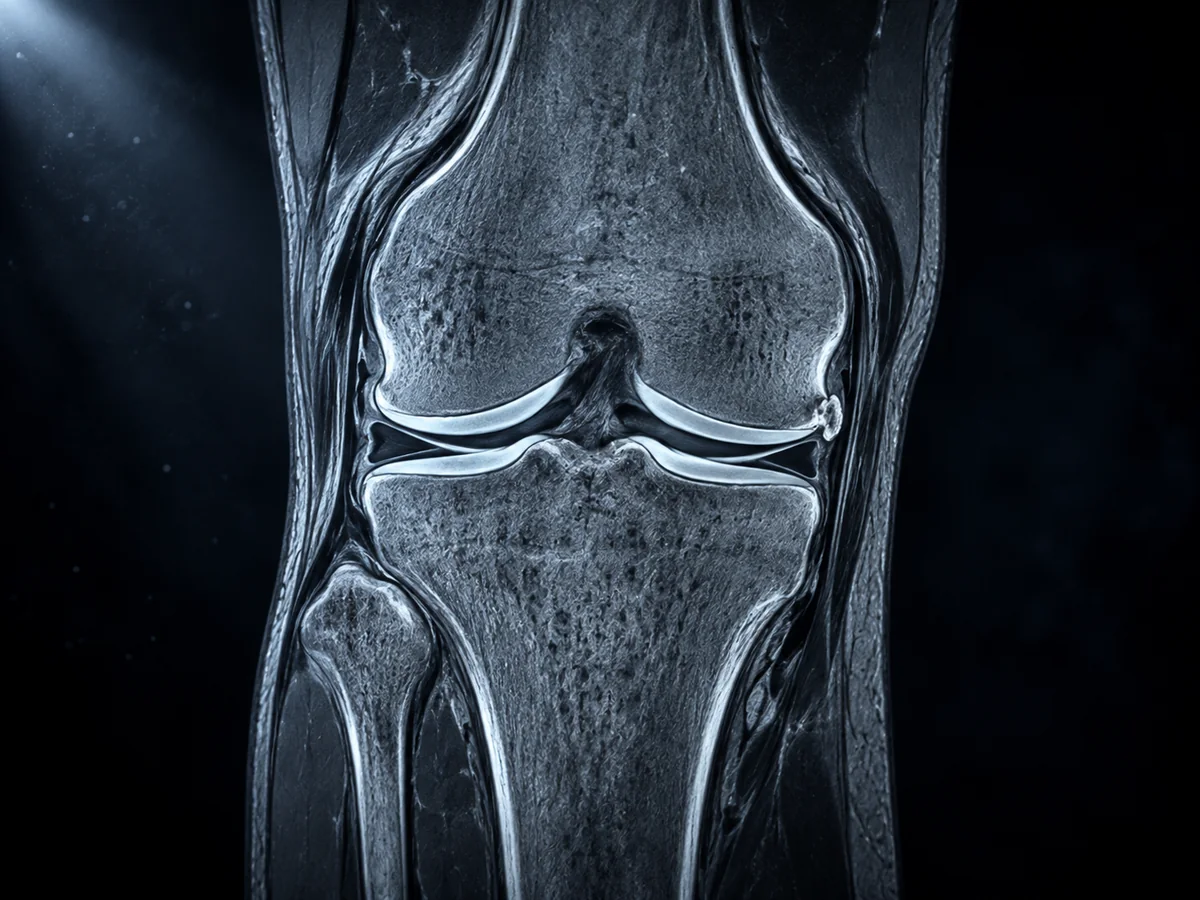
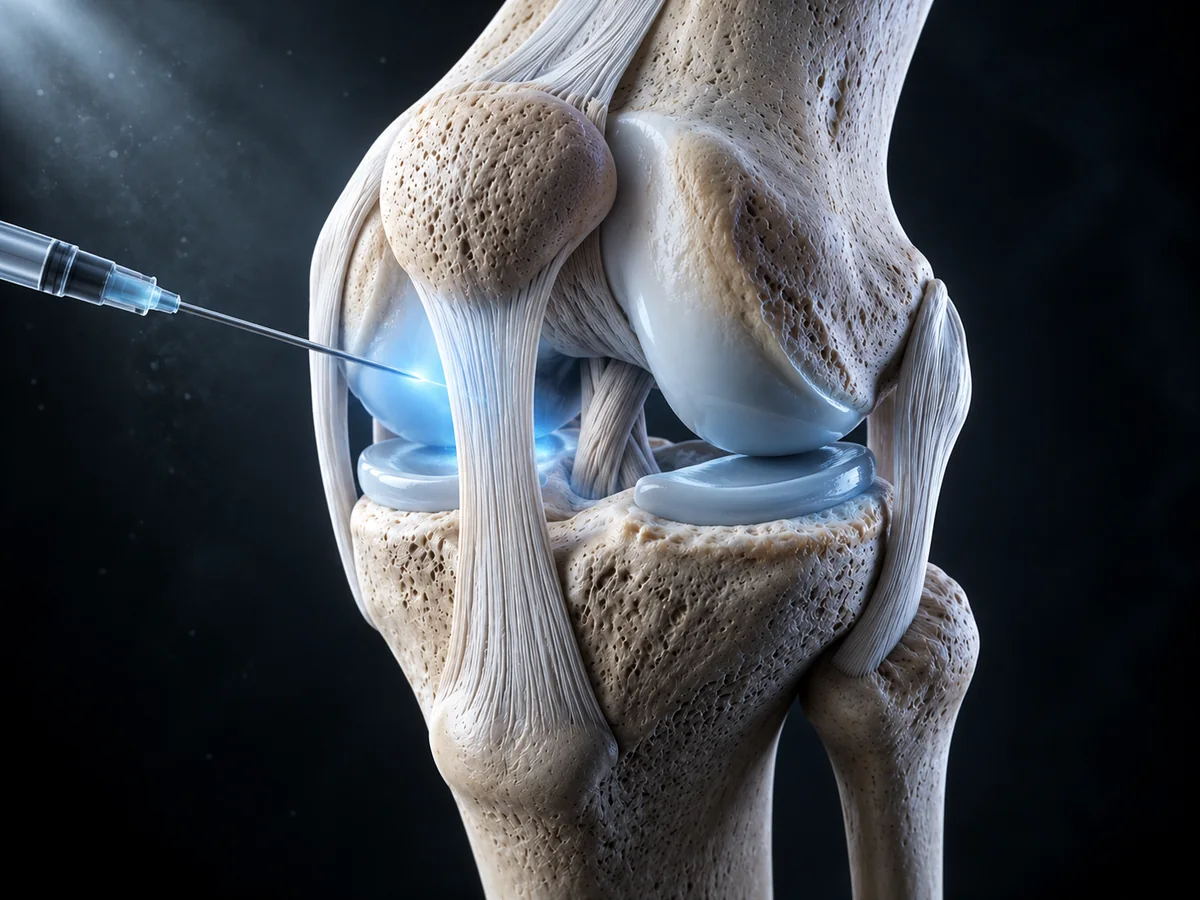
A 3D illustration of an intact knee joint with a fine needle entering the joint space, the cartilage and menisci shown in blue. A front-on knee MRI, with cartilage and joint space preserved in both compartments. Cells into the jointJoint space preserved · MRI
Stem cell therapy at Celva

The joint stays. The cells go in.

  • What is done Under live fluoroscopy or ultrasound, cells are placed in the joint space and into the tendons, ligaments, and muscles around it. Needle position is confirmed on screen before release.
  • Where A procedure suite inside Hospital Angeles, Tijuana, a 116-bed hospital, with MRI, X-ray, ultrasound, and CT in the same building.
  • Time on the table 15 to 30 minutes.
  • Anesthesia Local anesthetic, with twilight sedation available if you want it. No general anesthesia. You go home the same day.
  • Recovery Stay off the knee with very limited activity for the first 7 to 10 days, then physical therapy. Outside it, avoid loading the knee for 4 to 6 weeks, and running waits until weeks 8 to 12. The first days usually bring soreness, not relief, and we say so before treatment.
  • Who it suits Kellgren-Lawrence II to III: moderate wear with joint space preserved in at least one compartment. Also meniscus damage, chronic tendinopathy, and post-injury drift where PRP or cortisone has not held.
  • What it does not do It does not replace a joint, rebuild bone lost beneath the cartilage, or correct ligament instability that needs reconstruction. No outcome is guaranteed, and any change is measured over months, not hours.
  • What it costs in kind No sticker price. The physician team reads your imaging first, then a written, itemized quote is built from cell type and dose, one knee or both, and the same-day IV. Hospital, transport from San Diego, and the follow-up calls are inside the number. Insurance does not cover it; HSA and FSA eligibility depends on your plan.

The cells: umbilical-cord MSCs (mesenchymal stem cells), bone-marrow MSCs, and sometimes chondrocytes (cartilage cells), allogeneic (from a screened donor; no harvest procedure for you), grown in the on-site cGMP lab at Hospital Angeles and released on six tests: sterility, identity, viability, potency, endotoxin, mycoplasma. Banked, then thawed and re-checked the day of treatment. At least 95% viable at infusion.

When surgery is the right tool.

Two findings make surgery the honest recommendation, and Celva says so instead of quoting you: ligament instability that needs reconstruction, or a knee that needs hardware. Hardware is the tool for that. Cells are not.

Bone on bone is a different conversation, and that includes bone loss beneath the cartilage (subchondral bone loss). It is considered case by case. The expected response is lower than for a moderate knee, and the physician team tells you before any number. If your own goal is to delay a replacement, we will still consider you, after that forecast, not instead of it.

What the knee shows decides it. Not a sales team.
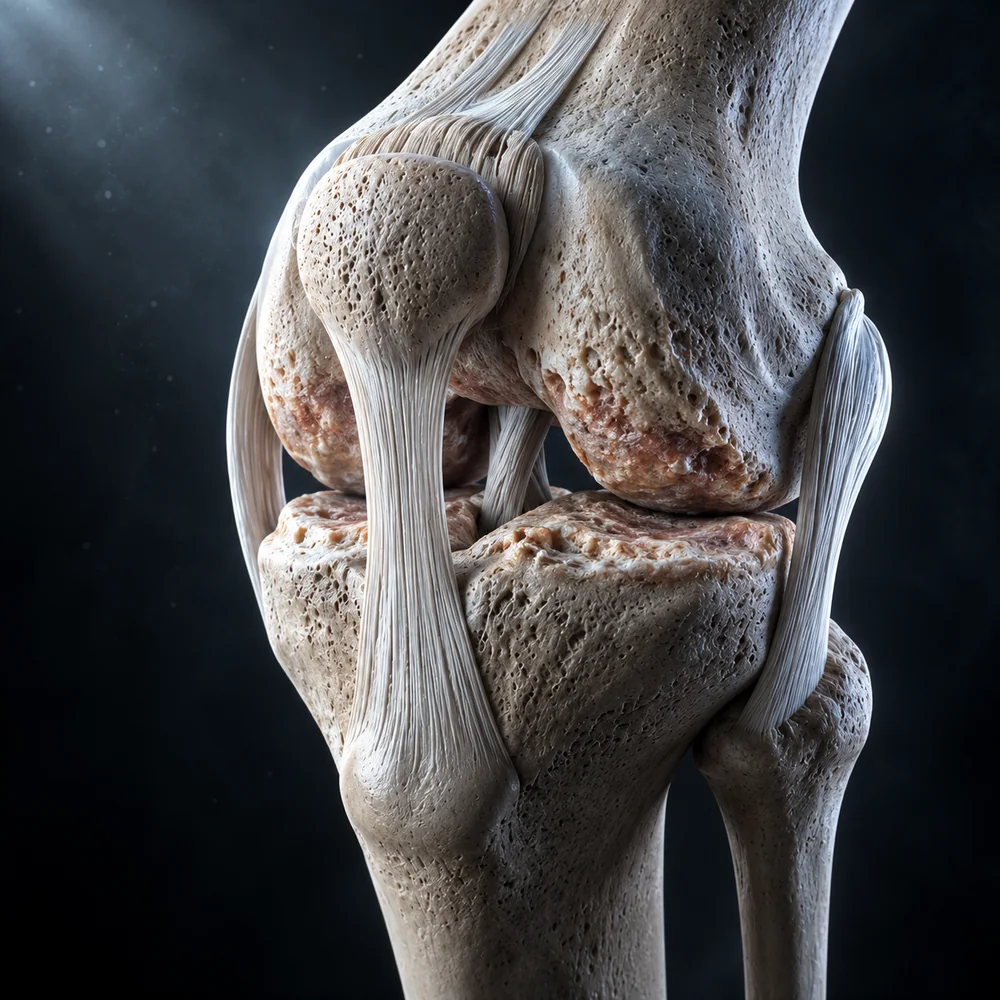
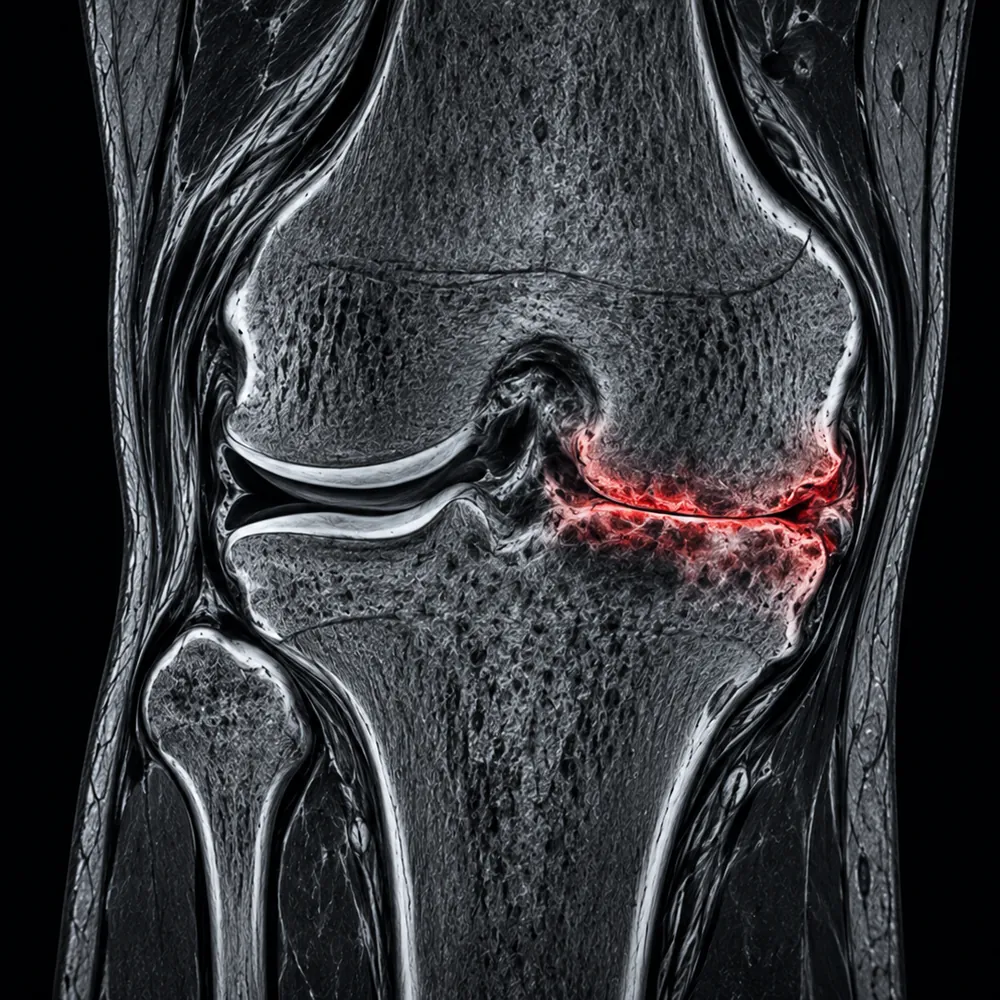
A 3D illustration of a knee with end-stage degeneration, the cartilage worn away so the thigh bone and shin bone meet directly. A front-on knee MRI with one compartment collapsed, the worn surfaces highlighted and no cartilage left between the bones. Bone on boneJoint space gone · MRI

He operated on knees for a living. Then it was his.

"I ended up having surgery twice on my knee. I had torn meniscus in my knee. I was already getting some degenerative changes in my knee." Dr. Kirk Lewis had spent his career in sports orthopedics before he was a Celva patient: an orthopedic surgery residency in Los Angeles, a fellowship in trauma surgery, a second in sports medicine, and the athletic teams at Boise State University under his care. On camera, in his own words.

Dr. Kirk Lewis, Boise · Sports orthopedic surgeon, 2 prior knee surgeries · 1:22

  • Orthopedic surgeon Residency in orthopedic surgery, Los Angeles
  • Fellowship, trauma surgery Subspecialty training after residency
  • Fellowship, sports medicine A second fellowship, in the joints athletes wear out
  • Boise State University athletics Sports orthopedic surgeon caring for the university's teams
  • College football, on scholarship 5 seasons as a player before medical school
  • 2 surgeries on his own knee Torn meniscus and degenerative changes, before he tried cell therapy

Credentials as he states them on camera. Dr. Lewis is a Celva patient, not a member of Celva's physician team. Individual results vary.

Who qualifies, and who we decline.

Your surgeon graded your knee from an X-ray. Bring that report, or the films, and Celva's physician team at Hospital Angeles reads it against these four lines before anyone talks about a number. If a physical assessment would settle it, the team examines the knee when you arrive.

Kathie M., 67 · Knee pain

Strong fit

Moderate degeneration, not yet bone on bone.

Kellgren-Lawrence II or III: moderate wear with joint space preserved in at least one compartment. The profile we accept most often.

Also a fit

Meniscus damage, chronic tendinopathy, post-injury drift.

Where conservative care has plateaued and PRP or cortisone has not held.

A frank conversation

Bone on bone, end stage.

Kellgren-Lawrence grade IV, including bone loss beneath the cartilage (subchondral bone loss). A lower expected response than a moderate knee, and we say so before any quote. If you want to delay a replacement, we will still consider you, case by case, after an honest forecast.

Not a fit

Ligament instability, hardware-required pathology.

Ligament instability that needs reconstruction, or a knee that needs hardware. Surgery is the right tool, and we will say so.

The questions people ask when they're comparing.

These are the questions we hear on the first call from someone holding a surgeon's recommendation. Straight answers. Not reassurances.

Can I do stem cells first and a knee replacement later?
The injection leaves your joint in place, so a replacement stays open to you afterward. Whether cells first is a sensible order for your knee depends on what your imaging shows, and that is a call Celva's physician team makes after reading it, not a coordinator. If your surgeon wants to speak with the team, that can be arranged.
How long does the decision take?
Your first call is with a Celva patient coordinator, about 15 minutes, who gathers your imaging, your surgeon's report, and your symptoms. Celva's physician team then reviews independently and comes back with a plain answer: candidate or not, and a written quote if yes. Nothing is committed to on the call.
What if I am bone on bone?
Bone-on-bone degeneration can still qualify, with a frank conversation first. End-stage degeneration with subchondral bone loss produces a lower expected response than a moderate knee, and the physician team tells you so before any quote. If your own goal is to delay a replacement, we will still consider treating you; we want you choosing with realistic expectations, not optimistic ones.
Does Celva ever tell someone to have the surgery?
Yes. Ligament instability that needs reconstruction, or a knee that needs hardware, is a surgical finding, and the physician team says so instead of quoting you. Inquiries are declined when the knee is not a fit.
Is the injection done in a hospital, and does it hurt?
It is done in a procedure suite inside Hospital Angeles, Tijuana, a 116-bed hospital. Local anesthetic is always used, with twilight sedation available if you want it, and most patients feel little to nothing. Mild soreness at the site for 24 to 72 hours is common, and the injection itself takes 15 to 30 minutes.
How many trips to Mexico is it?
One. A Celva driver picks you up in San Diego, you are treated inside Hospital Angeles, and most patients are home the same day. The follow-up calls at 1 week, then at 1, 3 and 6 months, then once a year, happen by phone or video. The treatment day is the only trip. Whether a second treatment makes sense is decided at your follow-up reviews.

Start with a conversation.

No pressure and no commitments. Your first call is with a Celva patient coordinator who gathers your imaging, your surgeon's report, and your symptoms and passes them to Celva's physician team for independent review. If you're a candidate, the quote comes back in writing. If surgery is the right tool, we say that instead.

Book a call →
These therapies are not FDA-approved. Treatments are performed in Mexico by licensed physicians in a hospital setting. Individual results may vary. Not medical advice.