Tendon
Rotator cuff
Partial-thickness tears, tendinopathy, and chronic irritation that hasn't resolved with PT or injections.
- Partial-thickness < 50%
- Chronic tendinopathy
- Post-PRP non-responders
Rotator cuff degeneration, shoulder osteoarthritis, and chronic impingement frequently respond to MSC therapy when the tendon is thinned but not fully retracted. The evaluation tells you what you're working with.
Medically reviewed by the physician team at Hospital Angeles · October 2026
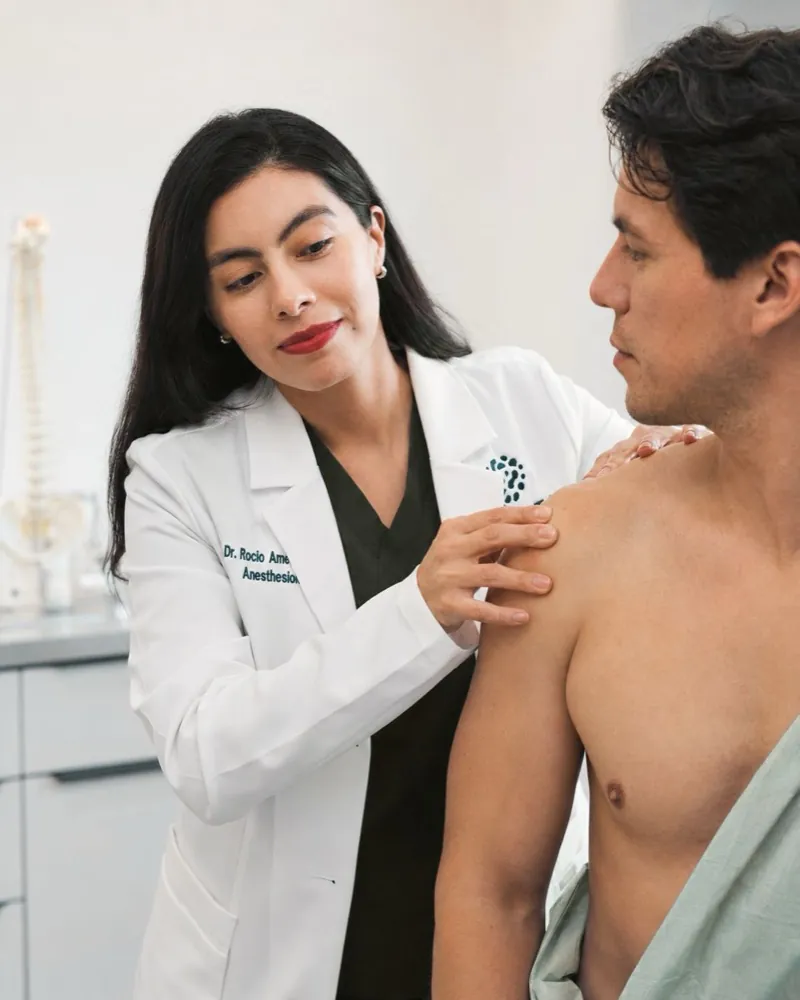
The shoulder is mostly soft tissue. Cuff thickness, tear size, and tendon retraction determine whether regenerative therapy is reasonable, or whether surgical repair is the right tool. We treat the shoulder as a system: the cuff tendons, the joint surface, and the surrounding soft tissue together, because they fail together.
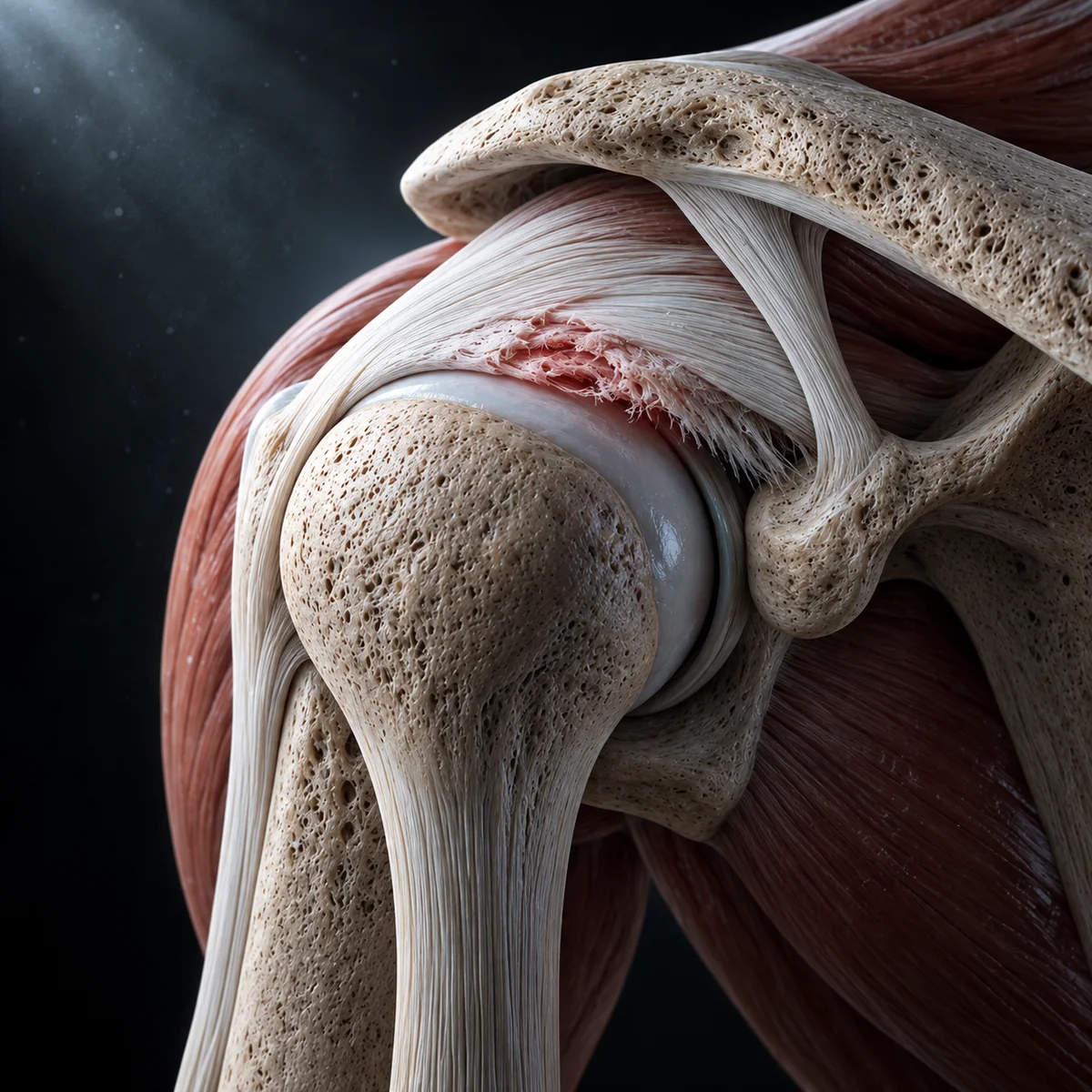
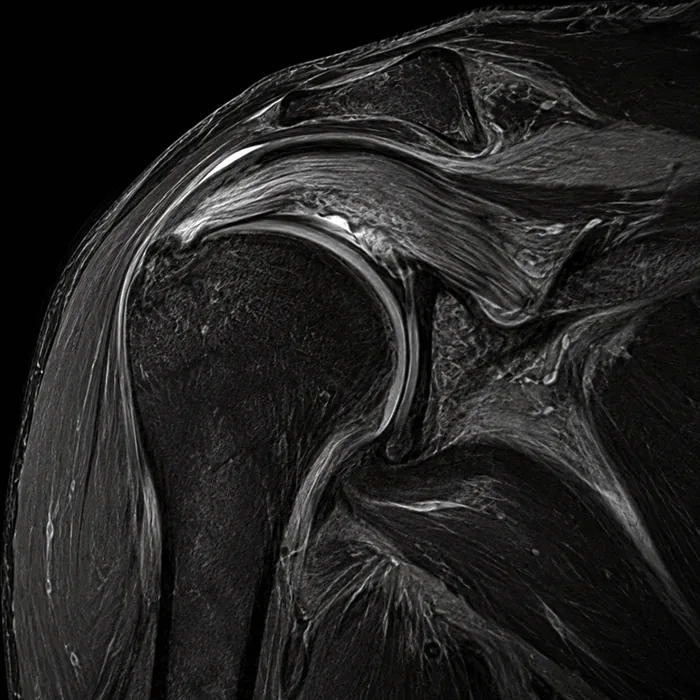
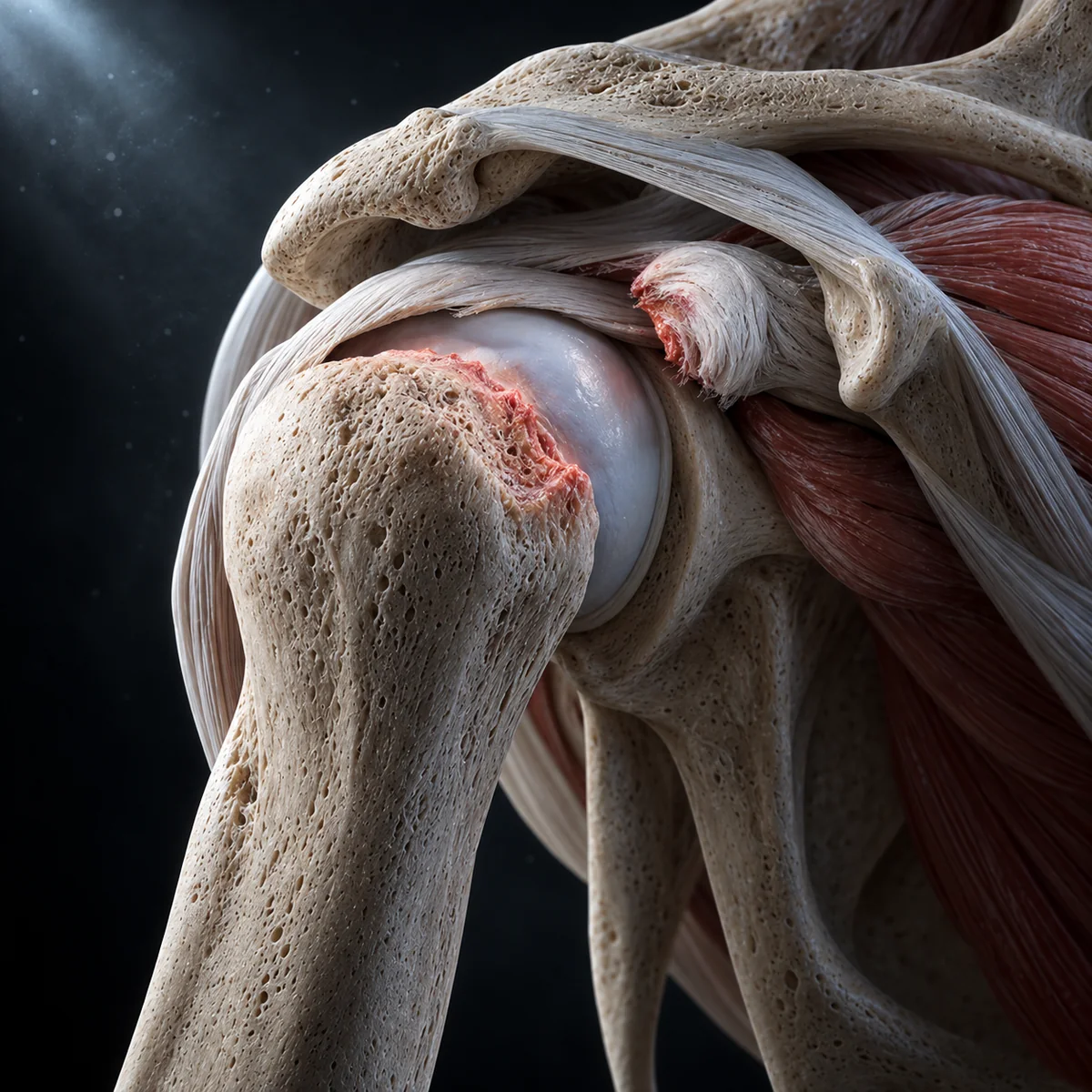
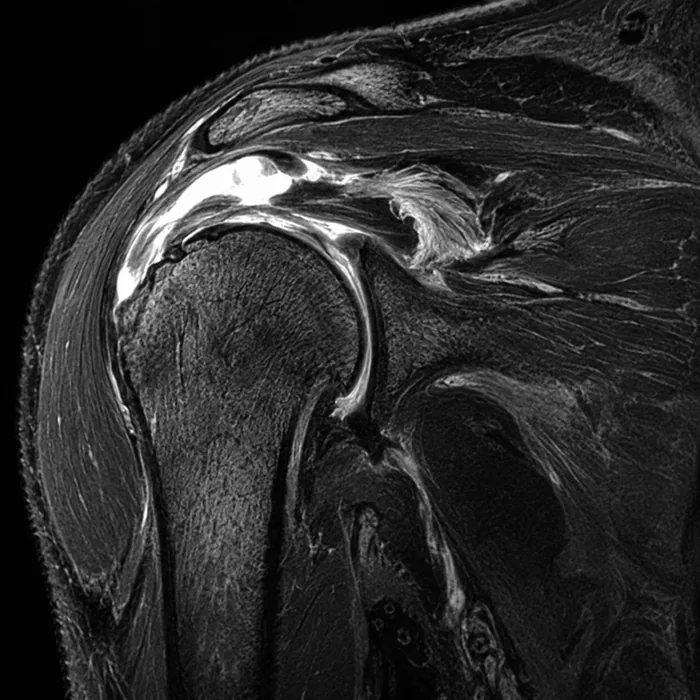
Partial-thickness tears, tendinopathy, and early-stage OA often respond. Full-thickness tears with significant retraction generally do not, once the tendon has pulled away from its footprint, biology alone won't reattach it.
We read your MRI before recommending anything. Our floor isn't "let's try." It's "this is a reasonable case."
Partial-thickness tears, chronic cuff tendinopathy, and refractory impingement.
Early to moderate shoulder OA and post-labral-repair residuals.
Full-thickness retracted tears and massive cuff tears where structural reattachment is the only real option.
Rotator cuff tendinopathy, partial tears, glenohumeral OA, and chronic impingement.
Partial-thickness tears, tendinopathy, and chronic irritation that hasn't resolved with PT or injections.
Early to moderate OA of the GH joint. Late-stage (bone-on-bone) cases are case-by-case if you want to delay a replacement.
Chronic subacromial impingement and labral degeneration where conservative care has plateaued.
Shoulder injections require precision against a moving tendon. Every delivery is done under ultrasound or fluoroscopic guidance, with the cells placed at or adjacent to the target structure.
Joint cases like yours use bone-marrow and umbilical-cord MSCs, often in combination and sometimes with chondrocytes for cartilage support. The exact recipe, which cells, what doses, which routes, is decided by Celva's physician team after reviewing your imaging. Matched to your case, not pulled off a shelf. Why we use multiple cell types →
Delivered to the cuff footprint, GH joint, or subacromial space depending on pathology. Procedure runs under local anesthetic, with twilight sedation available if you want it. A comfortable, still patient lets the physician place the cells precisely. Walking and light daily use are fine; protect the shoulder for 7 to 10 days.
Cuff thickness, tear characterization, and joint status evaluated by the physician team.
Cuff footprint vs. intra-articular vs. subacromial, matched to pathology.
Live needle visualization. Cell release confirmed at target.
A second MSC dose in the infusion suite. The IV and the injection are designed to work together.
Your patient coordinator or aftercare specialist follows up for good, not just once: a pain-and-safety call at 1 week, then calls at 1, 3 and 6 months, then once a year, by phone or video. A physician joins when needed. Structured, not reactive.
Post-injection soreness resolves. Baseline function largely unchanged.
Reach, overhead activity, and sleep typically improve first.
Strength and load tolerance are reviewed. Whether a second treatment makes sense is decided at your follow-up reviews.
Improvement can keep building through the first year, with ongoing conditioning.
Shoulder tends to move faster than hip or spine, but the same principle holds: no meaningful change is expected in the first two weeks. What comes back is reach and sleep, read over months, not day-to-day feel.
If your cuff has fully retracted off the footprint or you have a massive tear pattern, MSC therapy will not reattach the tendon. We will refer you to a surgeon we trust when that's the case.
Your first call is with a Celva patient coordinator; Celva's physician team reads your MRI and tells you plainly whether MSC therapy fits your case, or whether repair is what the structure actually needs.
Book a call →Not medical advice. Individual results vary. All patients undergo physician screening before treatment is recommended.