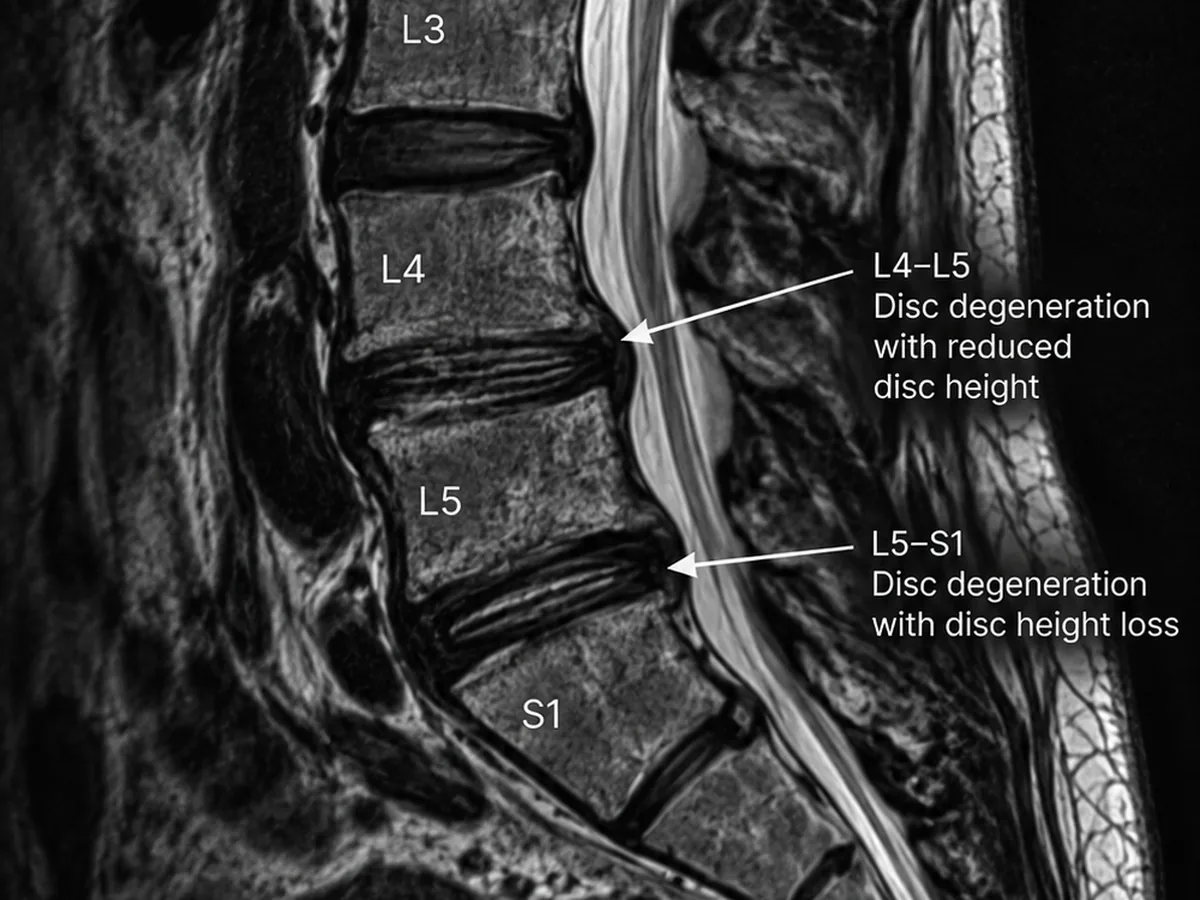
Discogenic pain & degenerative disc disease
Early disc degeneration with matching pain pattern and preserved disc height.
- Single or two-level
- Modic I or II changes
- Preserved height
For discogenic pain, facet arthropathy, degenerative disc disease, and radicular (nerve) pain, mesenchymal stem cell (MSC) therapy is worth reviewing before a fusion or disc replacement. Spine cases need more evaluation, not less, and we do it carefully.
Medically reviewed by the physician team at Hospital Angeles · October 2026
Not every back or neck pain is a spine-structure problem, and not every spine-structure problem responds to biologics. The point of the evaluation is to separate those three categories before anyone commits.
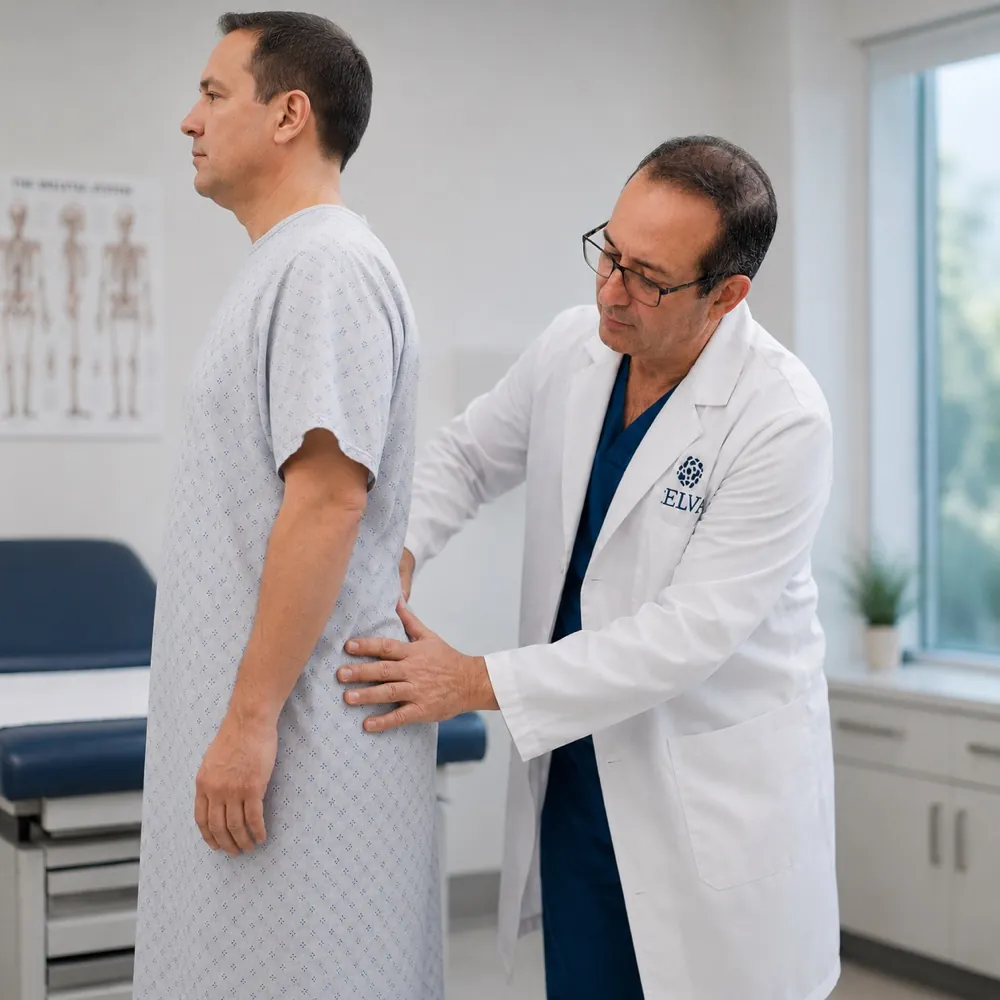
Patients who do well have identifiable disc, facet, or nerve-root pathology, confirmed imaging findings, and pain mechanisms that match. They've often been through PT, injections, and ablations without durable relief.
The spine is its own structure: a central column held upright by the muscles and ligaments around it, more like a tree than a single joint. We treat the disc, facet, or nerve root that's driving your pain, with the supporting frame around it accounted for, which is why the spine is evaluated and treated on its own terms.
Spine gets the most careful evaluation of any region. We review every case thoroughly, and if something would be better handled with urgent or surgical care than with cell therapy, we recognize it and point you to the right place. The way your pain presents on its own doesn't rule you out.
Strong fit
MRI-confirmed disc pathology, positive provocative discography or modic changes, pain pattern consistent with findings.
Also a fit
Facet-mediated axial pain confirmed by diagnostic block. Lumbar or cervical radicular pain, evaluated by mechanism and imaging concordance.
Triaged first
Some spine findings are better handled by urgent or surgical care than by cell therapy. We screen for them during evaluation and route you to the right place. We refer when that is the right tool.
Early disc degeneration with matching pain pattern and preserved disc height.
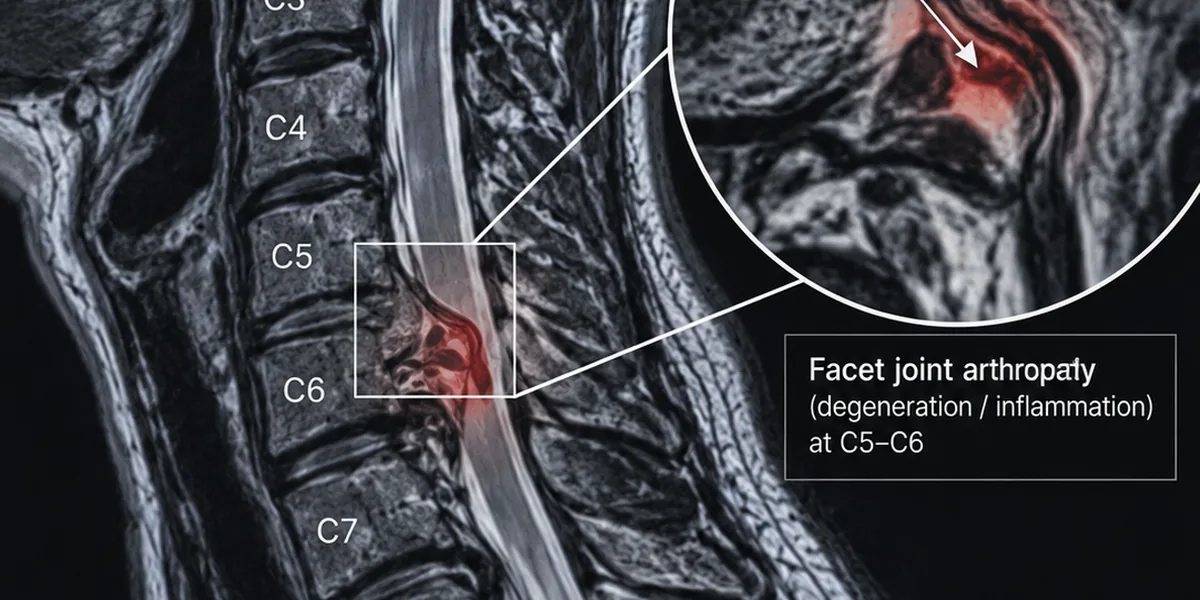
Facet-mediated axial pain confirmed by diagnostic block response.
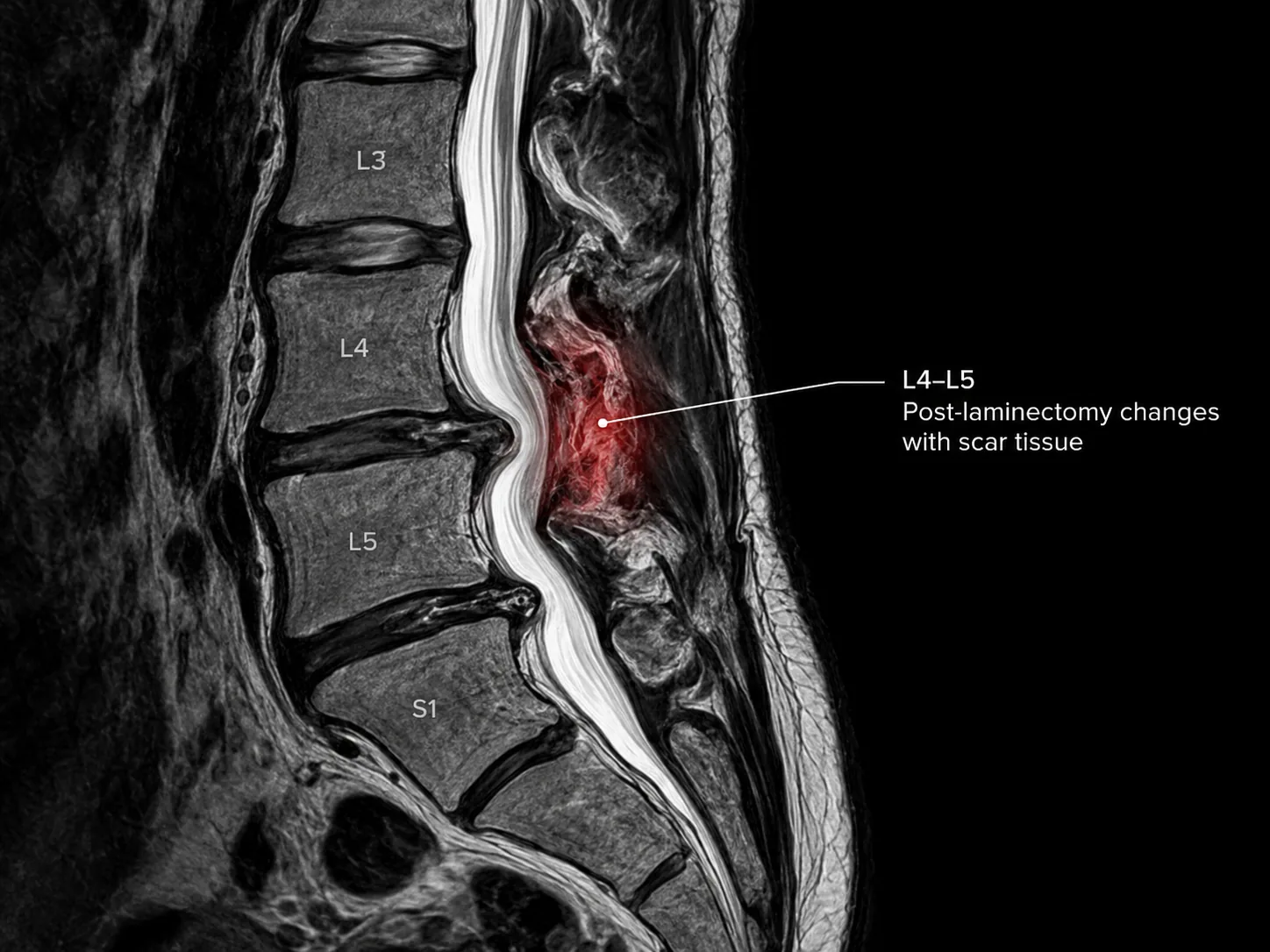
Persistent pain after decompression, failed back syndrome, post-ablation patients still searching.
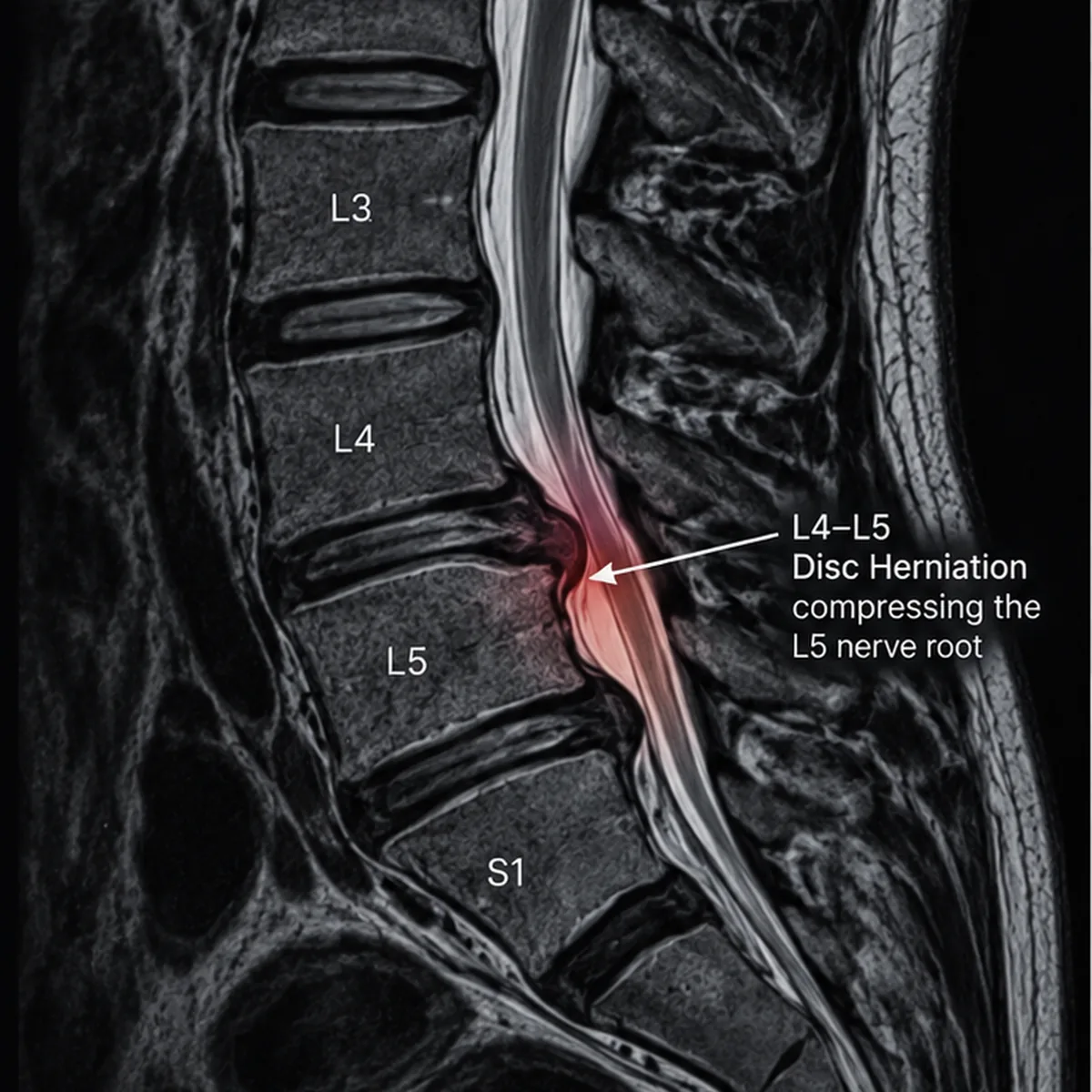
Lumbar and cervical radiculopathy and sciatica from an inflammatory or contained-disc source. We target the inflammatory environment around the nerve root, not nerve regeneration.
Spine injections require fluoroscopic guidance with contrast confirmation at every level. No ultrasound shortcuts. No blind injection.
Spine cases like yours use bone-marrow and umbilical-cord mesenchymal stem cells (MSCs), often in combination and sometimes with chondrocytes for cartilage support. Intradiscal or peridiscal delivery for disc cases, intra-facet for facet pathology, or combined for mixed presentations. The exact recipe is decided by Celva's physician team after reviewing your imaging. Matched to your case, not pulled off a shelf. Why we use multiple cell types →
In some spine cases the medical team may add a supporting therapy alongside the cells. PRP (platelet-rich plasma, growth factors concentrated from your own blood) supports the local tissue environment. Medical ozone, placed into the epidural space or directly into the disc, can help calm inflammation and ease pressure inside an irritated disc. These are not part of every case. Neither replaces the cell therapy.
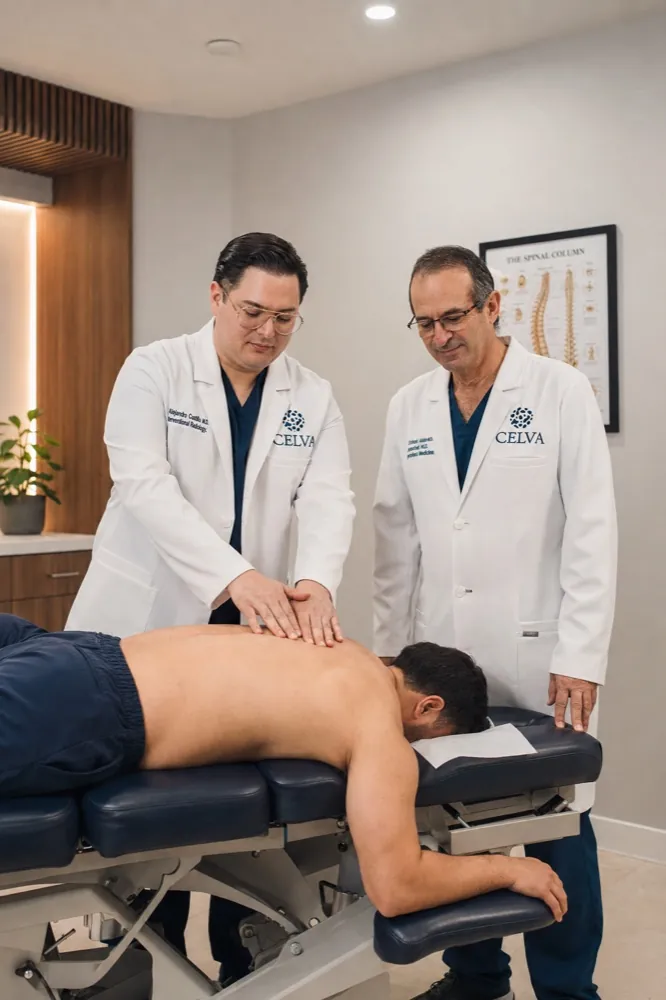
Performed at Hospital Angeles, Tijuana, under local anesthetic, with twilight sedation available if you want it. Most patients are home the same day, with about a week of soreness before normal activity.
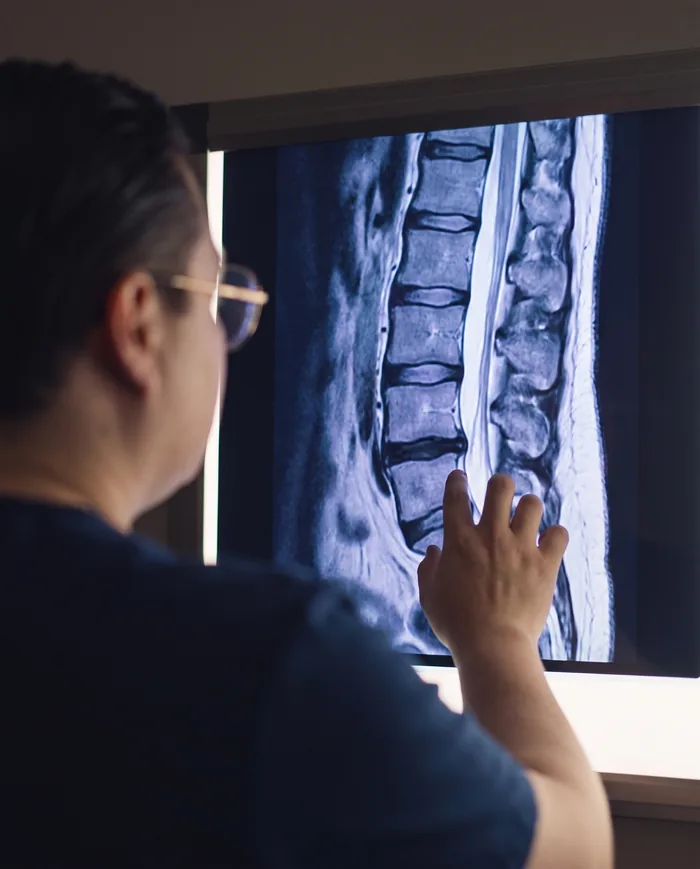
Imaging cross-checked against pain pattern and prior diagnostic blocks. Level selection is deliberate.
Intradiscal, peridiscal, intra-facet, or combined. Single or multilevel, one to three levels typical.
Contrast confirmation at every level before cell release. Sterile cGMP handling throughout.
A systemic IV dose alongside the injection. The IV and the injection are designed to work together.
The spine responds slowest, so the later calls matter most: a pain-and-safety call at 1 week, then calls at 1, 3 and 6 months, then once a year, by phone or video, from your patient coordinator or aftercare specialist. Spine is one session, like a joint. Whether a second treatment makes sense is decided at your follow-up reviews.
~ 1 wk
Most spine patients have local soreness for about a week, then are cleared to return to normal activity. The response signal still arrives later; this is about what you can do, not when relief lands.
~ 90 days
Function begins improving for responders. Morning stiffness and sit-to-stand patterns shift.
~ 180 days
A review of what has changed since your session. Whether a second treatment makes sense is decided at your follow-up reviews.
Through year 1
Improvement can keep building through the first year. How long it holds varies by case and individual response. The physician team discusses what's realistic during review.
Spine is one session, like a joint. Because these problems build up over years, not weeks, the response is read over months. Whether a second treatment makes sense is decided at your follow-up reviews.
Expect the first days to start with soreness, not relief. The needle work through the surrounding tissue creates inflammation by design, and that settles before any meaningful shift begins. Almost every spine-injection patient also receives a systemic IV the same day, which runs its own faster sleep-and-energy curve alongside this slower local one. On activity, though, spine is the lighter lift: unlike a knee, hip, ankle or foot injection, which asks you to stay off the joint for the first 7 to 10 days, most spine patients are cleared for normal activity once the first week of soreness passes.
A fusion can settle one segment, but it stiffens part of a structure built to move as a whole.
The levels above and below take the extra load, and we often see those patients a year or two later with new pain somewhere else. The spine works like a tree: stiffen the trunk and you change everything around it.
So we look hard at whether a less destructive option fits first. When there's true instability or an urgent finding, decompression or fusion is the right tool, and we'll say so.
Your first call is with a Celva patient coordinator. Celva's physician team then reviews your imaging, history, and pain pattern, and tells you plainly whether MSC therapy is a realistic option or whether surgery is the honest answer.