Stem cell treatment near San Diego, inside a real hospital.
If you searched "stem cell treatment near me" from San Diego, we're not in San Diego. We're 25 to 30 minutes south, inside Hospital Angeles in Tijuana, Mexico. A Celva driver picks you up anywhere in Southern California (your home, a hotel, the SAN curb, even LAX) and has most patients back the same day. Before anyone drives anywhere, the physician team reads your imaging and says whether you're a candidate.
A patient coordinator typically calls within 1 business day. About 15 minutes, no cost, no obligation.
Medically reviewed by the physician team at Hospital Angeles · October 2026
Door to door
25 to 30 minutes
From downtown San Diego or the SAN airport to the hospital doors. About 20 minutes to the border, 5 to 10 across. You never leave the car.
The return
Medical lane, 15 to 30 min
The northbound crossing at San Ysidro uses the medical lane, against 3 to 4 hours in the general lanes. Most patients are home the same day.
Most patients sleep in their own bed that night.
That is where the day ends. Here it is from the start: about 20 miles from San Diego to the hospital doors, and you stay in the car for all of it.
-

Reviewed first
Before you travel.
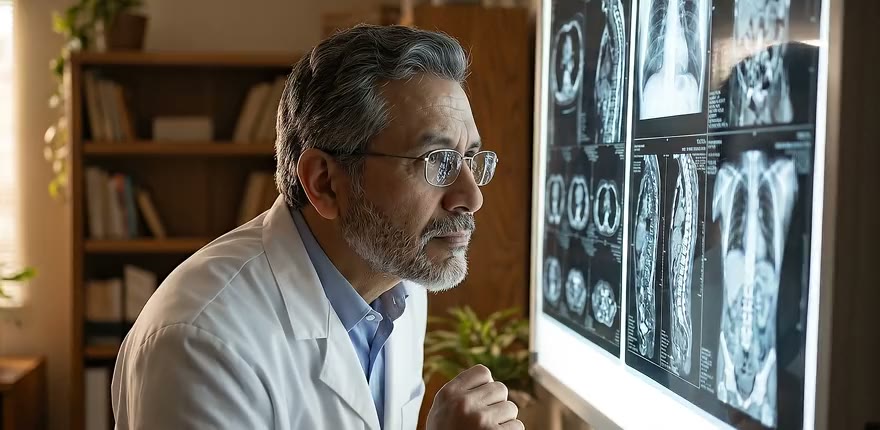
A Celva patient coordinator collects your history, your imaging and your reports. The physician team reads them before anyone quotes or books you.
-

Picked up
Anywhere in Southern California.
Your home, a hotel lobby, the SAN airport curb, even LAX. From San Diego, about 20 minutes to the border and 5 to 10 across, with the Celva driver crossing beside you.
From Los Angeles or Orange County, the Celva driver comes to you.
-

Treated
Under live imaging.
The injection is placed in the procedure room under fluoroscopy or ultrasound. It takes 15 to 30 minutes, for a joint or the spine. Your dose was cleared before you arrived.
-

The IV infusion
About 45 minutes in the chair.
The infusion suite is a recliner, a cannula and a nurse who stays with you. Almost every joint and spine patient also receives a systemic IV the same day. Some patients come for the infusion alone.
-

Discharge
The attending physician clears you for travel.
A monitored rest, then your coordinator walks you through aftercare. Most patients go home the same day.
-

Home
Northbound through the medical lane.
You stay in the black SUV. The general lanes at San Ysidro run 3 to 4 hours; the medical lane is faster. You go home knowing who to call: your patient coordinator or your aftercare specialist.
A passport is strongly advised; a passport card is enough for the land crossing. 1 or 2 companions are welcome, never required, and ride along. Follow-up is calls from home at 1 week, then at 1, 3 and 6 months, then once a year. You do not keep coming back to Mexico.
Cells you cannot get in the United States.
Every clinic you are comparing says "stem cell therapy". They are not the same product. The FDA pathway most US clinics operate under allows your own cells, minimally handled and injected the same day. Culture-expanded allogeneic MSCs (from a screened donor, grown in a lab, with no harvest procedure for you) are not available under it. Those are the cells Celva treats with: grown in the on-site cGMP lab at Hospital Angeles (cGMP: the rules for how drugs must be made), with a culture medium and process developed in-house, refined over 17 years, and used nowhere else. That is what the drive is for.
The US same-day pathway
Your own cells, minimally handled
- Your own bone marrow, harvested and injected in the same procedure. Fat-derived cells do not qualify: the FDA treats them as a drug.
- Minimally handled by rule, so the cells are never grown or expanded.
- A smaller, less characterized dose than a lab pipeline produces.
- Viability at infusion is rarely counted, because there is no lot to release.
Why the cells are the reason
Cells found nowhere else
- Culture-expanded allogeneic MSCs from a screened donor, three cell types matched to your case, not available under the US same-day pathway.
- Grown in the on-site cGMP lab at Hospital Angeles by the team that treats you, with a culture medium and process developed in-house over 17 years. Most clinics buy frozen vials from an outside supplier.
- Every lot released on six lab tests: sterility, identity, viability, potency, endotoxin, mycoplasma.
- At least 95% viable at infusion, the post-thaw number, checked the morning you are treated. Not the freeze-date number.
- The physician team reads your imaging, and one of the physician team treats you.
- Fluoroscopy or ultrasound guidance for every targeted injection, in a hospital procedure suite.
Two questions separate the clinics: who grew the cells, and when did anyone last check that they were alive? Ask any clinic, ours included.
We'll tell you if it's not a fit.
The cortisone worked, then wore off. The epidural bought a year. PRP did a little, or nothing. Then a surgeon said the next step is a replacement. If that is your ladder, you are the patient we see most often, though not the only one we see. Your imaging decides. Not a sales team.
-
Strong fit
Moderate joint pain, surgery on the table.
Knee, hip, shoulder or spine degeneration where conservative care has plateaued but the joint is not yet end-stage.
-
Also a fit
Systemic recovery and longevity.
Patients pursuing IV protocols for recovery and healthy aging, planned with a physician.
-
A different path
Neurologic, cardiovascular, autoimmune and post-viral.
A complex diagnosis, and more specialists than you can count. These cases are read on their own terms, after a longer evaluation, and what you get first is a candid read on fit.
-
Not a fit
Hardware-required cases.
Ligament instability, or pathology that needs reconstruction or hardware. Surgery is the right tool, and we will say so.
Recent imaging helps, but it is not a requirement. If you have an MRI, X-ray, CT or ultrasound, we review it. If you don't, the imaging your case needs is done at Hospital Angeles before treatment, at no charge, and read in-house the same day. If an exam would settle it, the team examines you when you arrive, before anything is treated.
What decides your price.
If you scrolled here for a number, it is not on this page, and here is why. Stem cell therapy is priced like a procedure, not a product. Four things set the cost of your day, and every one of them is decided from your case by the physician team, not picked off a menu.
-
Cell type
Which cells, and who grew them.
Umbilical-cord MSCs (mesenchymal stem cells), bone-marrow MSCs, or chondrocytes (the cells that produce cartilage), and often a mix of them, grown in the on-site lab at Hospital Angeles and released on six lab tests. Different cells carry different lab work. Cells are the largest line on the bill.
-
Dose
How many cells, verified alive the morning you are treated.
The count is set for your case and re-checked that morning: at least 95% viable at infusion. A bigger dose costs more. A dose nobody verified costs less. Celva verifies every one.
-
Areas treated
One knee, or both, and your back?
More areas means more physician time and a larger total dose. All of it on the same day.
-
Follow-up
The check-in calls, inside the number.
Follow-up calls at 1 week, then at 1, 3 and 6 months, then once a year, are part of the quote. Not a plan you buy afterward.
Not covered by US insurers; patients pay directly. HSA and FSA eligibility depends on your plan. Imaging at the hospital, when your case needs it, is included at no charge. The drive from San Diego is in the plan, not a line item you arrange yourself.
What you searched for has its own page.
Most people searching stem cell treatment near San Diego have a joint in mind. Some have something standard care has not reached. What we accept for each, and where to read the rest.
Knees
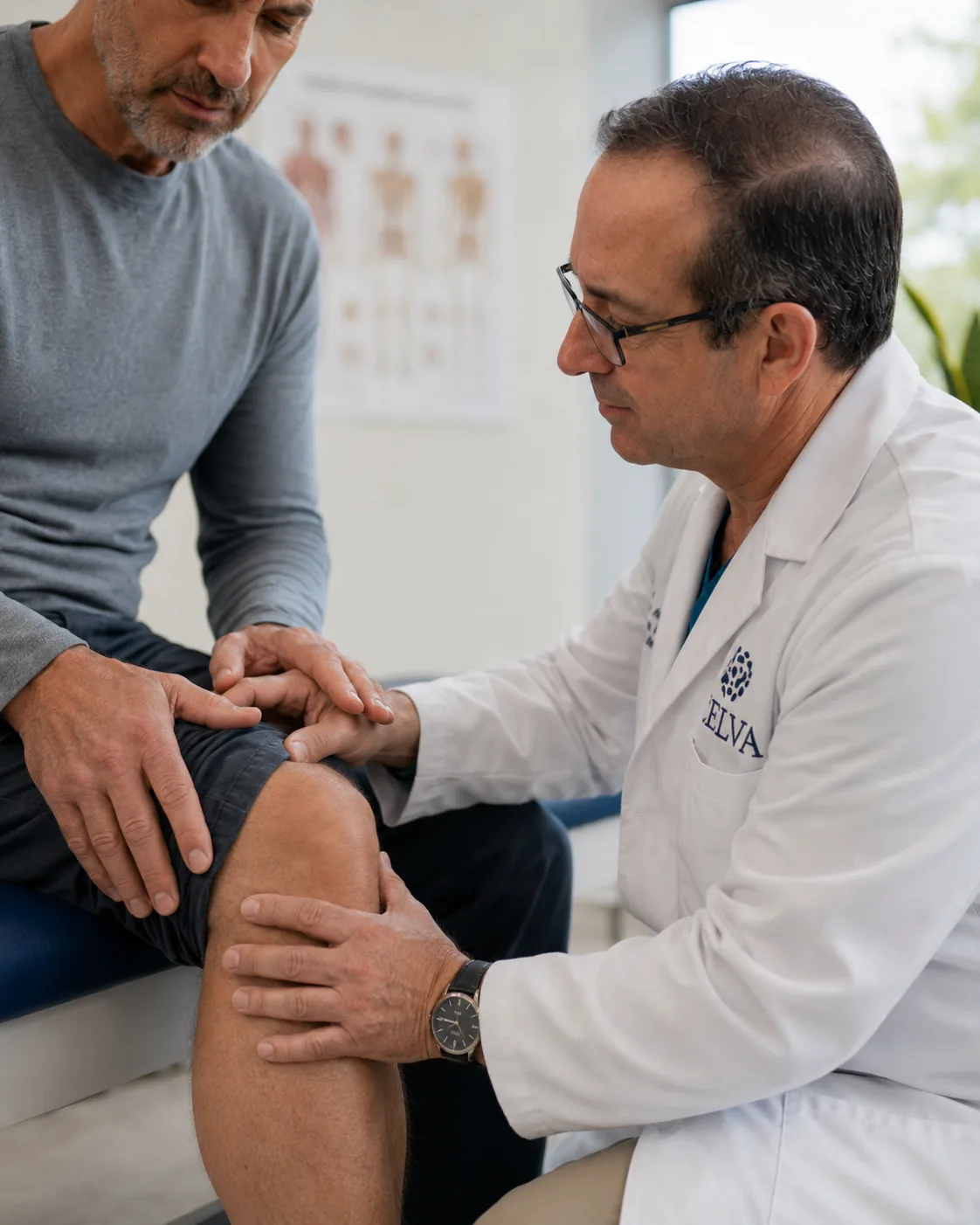
Knee injections under live imaging, needle confirmed before release. Moderate osteoarthritis with joint space left is what we accept most. Bone on bone gets an honest forecast.
Stem cells for the knee →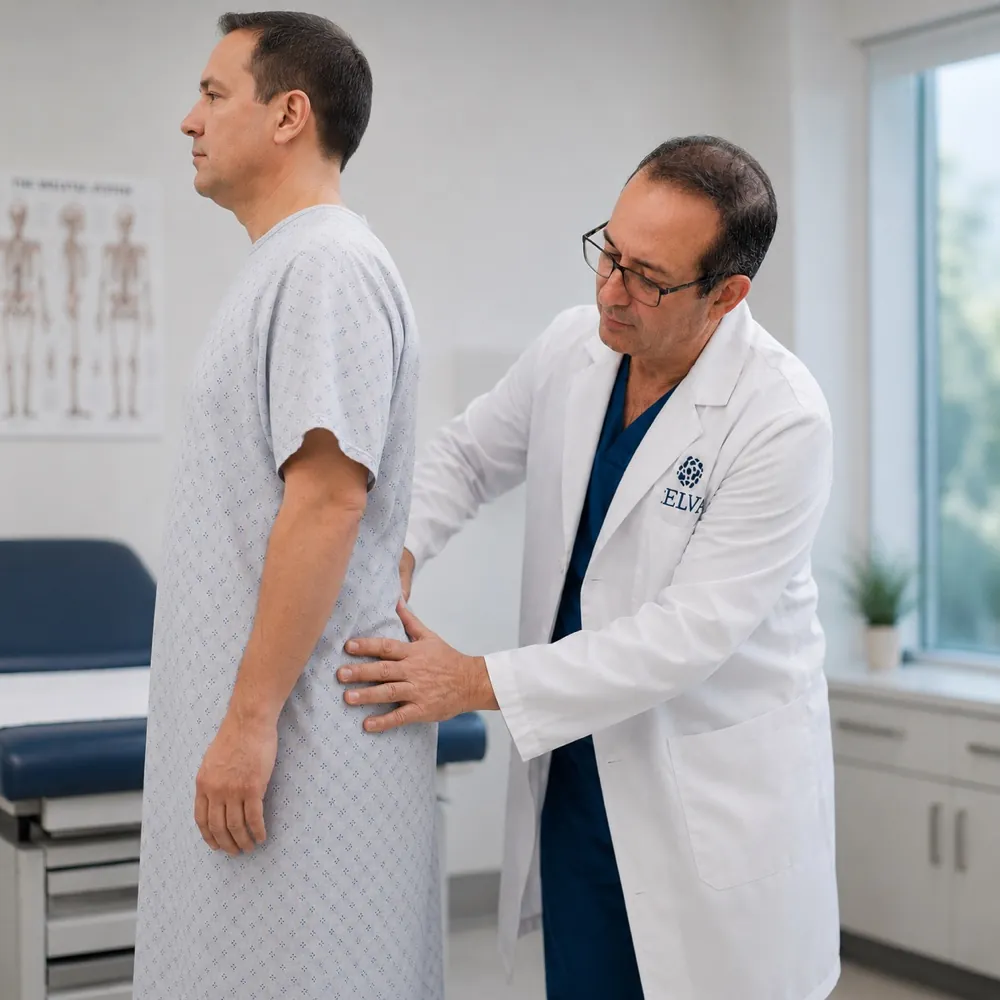
Hips
The hip sits deep under muscle, so every injection runs under fluoroscopy, contrast confirming the needle inside the joint. Moderate arthritis with joint space left is what we accept most.
Stem cells for the hip →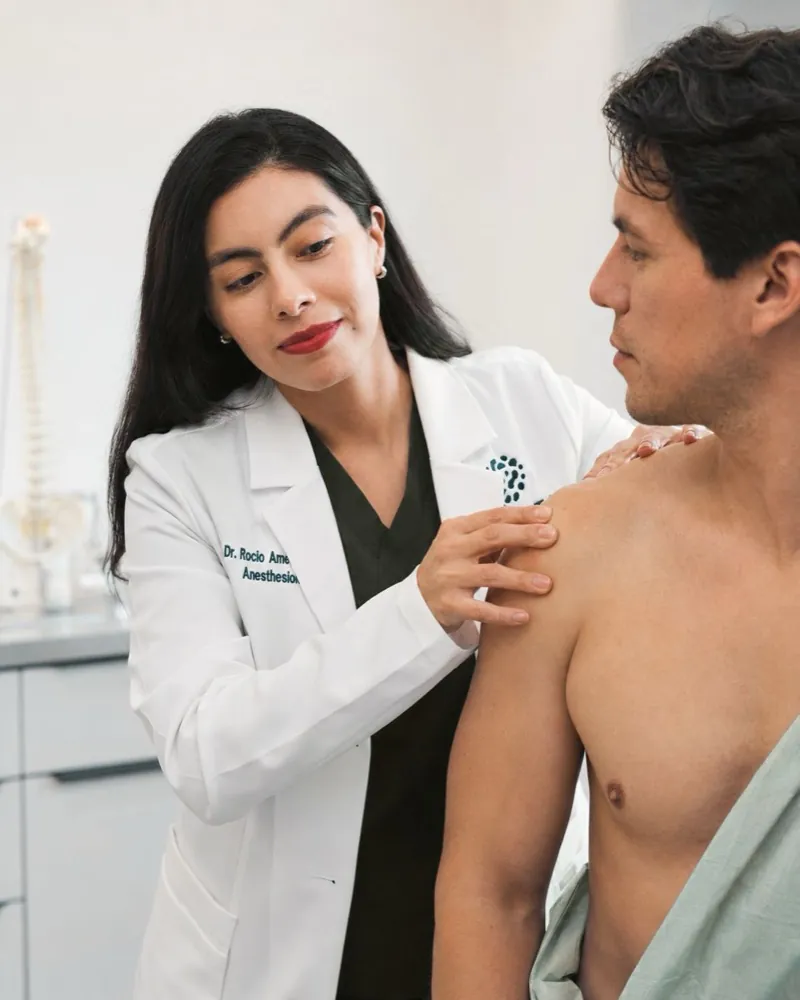
Shoulders
A cuff tendon moves, so every shoulder injection runs under live imaging, ultrasound or fluoroscopy, needle in view. Partial tears and chronic tendinopathy often fit. A retracted full-thickness tear is surgery, and we say so.
Stem cells for the shoulder →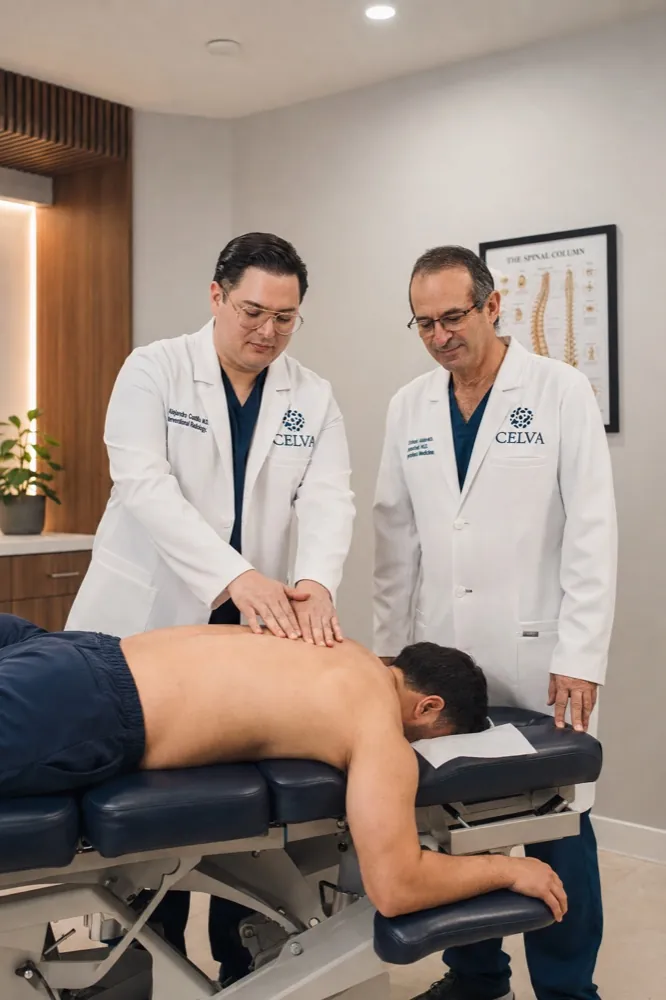
Backs and necks
Stem cell treatment for back pain starts with your MRI. A disc sits behind bone, so every spine injection runs under live X-ray, contrast confirming the level. Instability or a worsening nerve deficit is surgery.
Stem cells for the spine →Not a joint? Cell therapy is designed to act on inflammation and the tissue you still have, not on a diagnosis. These four are read on their own terms, after a longer evaluation.
Neurologic
Parkinson's, MS and recovery after a stroke. The aim is to calm inflammation; there is no credible evidence that cells restore lost neurons, and we say so first.
Who is a fit →
Cardiovascular
Ischemic heart disease is the one we see. Your cardiologist keeps directing your care; we look at whether there is active biology to influence.
Who is a fit →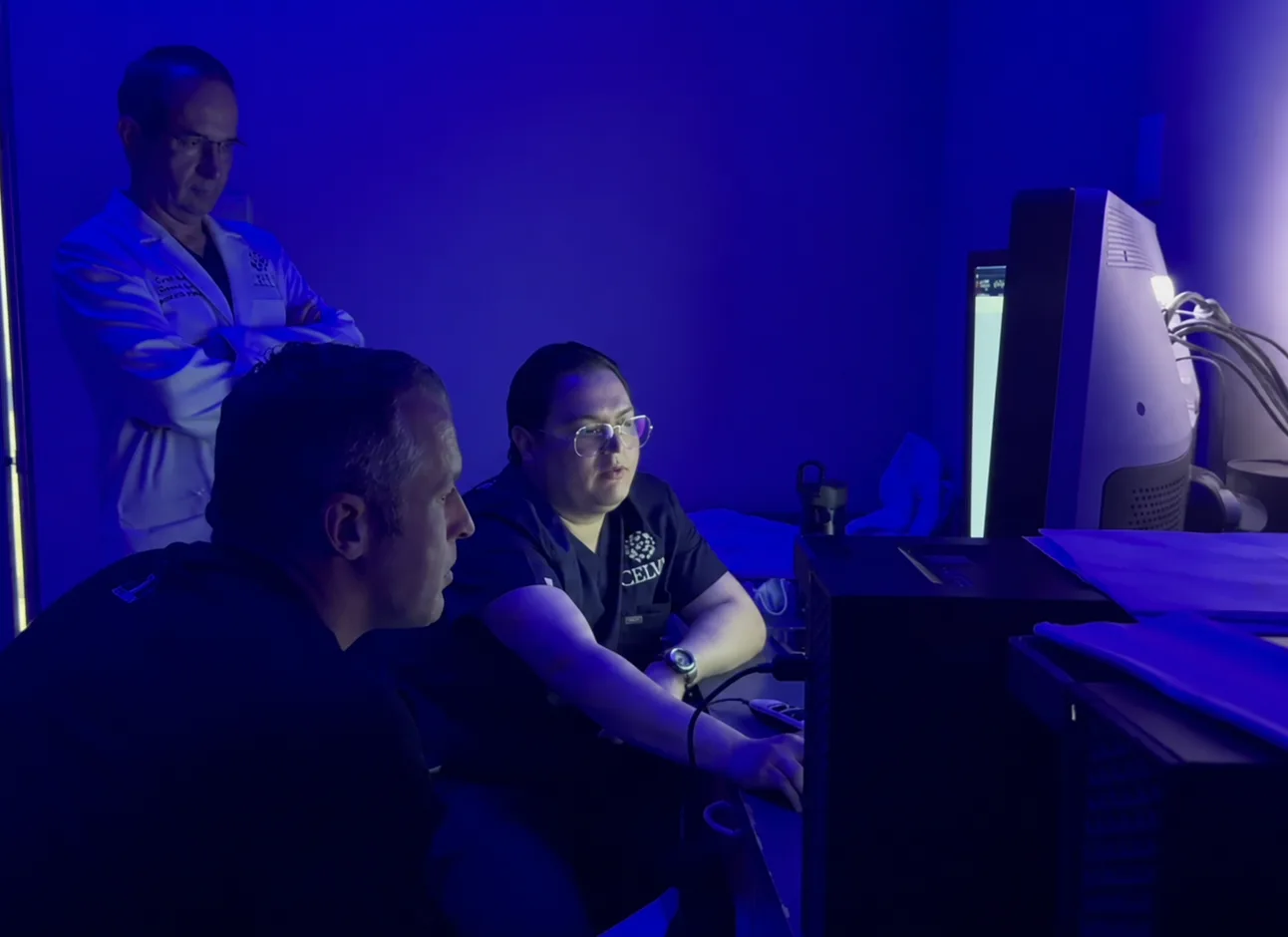
Autoimmune
These cases are read on immune activity, not on the diagnosis. Whether a second treatment makes sense is decided at your follow-up reviews.
Who is a fit →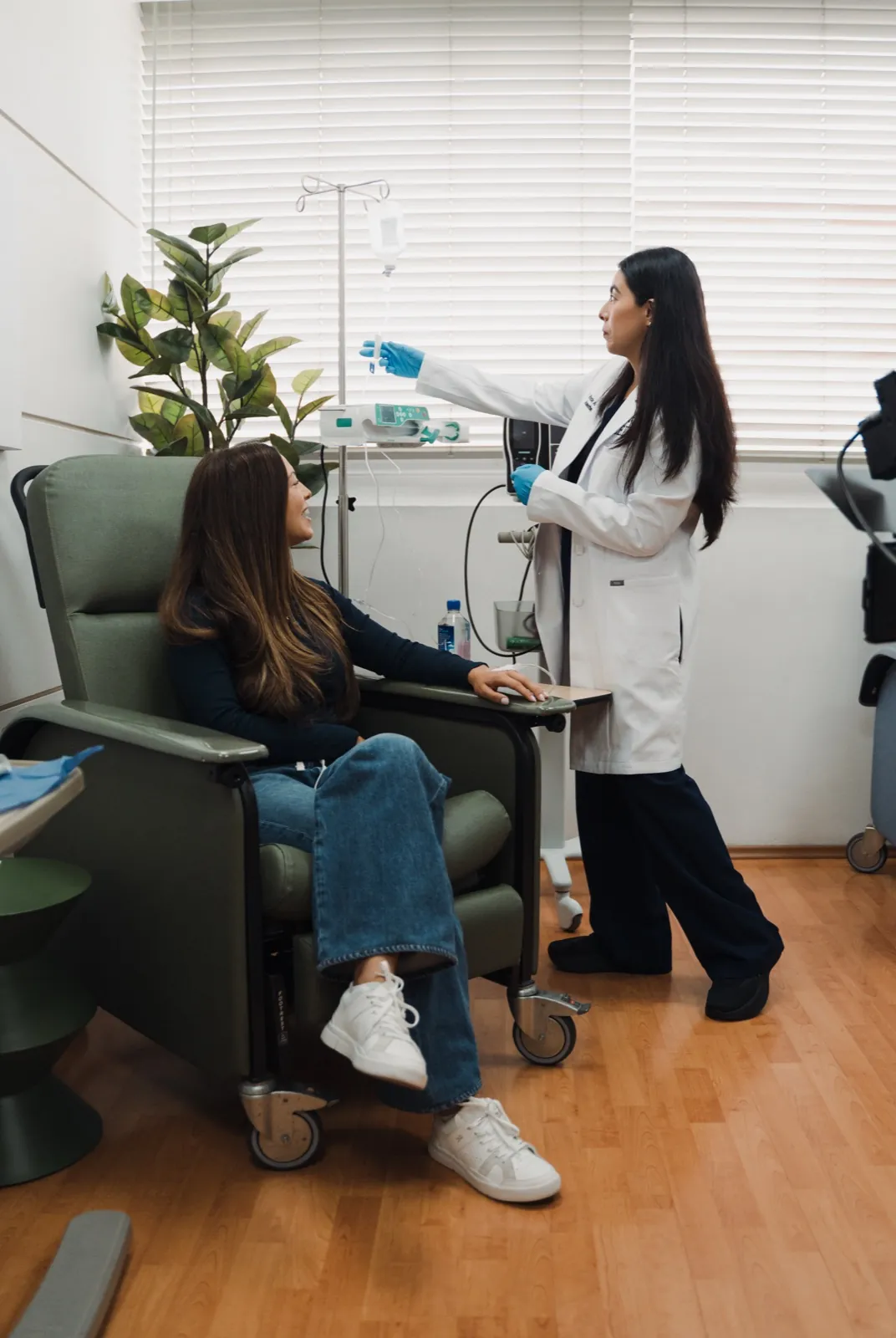
Post-viral
Dysautonomia and the long tail after an infection. Earlier gives more to work with than later, which is a reason to ask sooner.
Who is a fit →The San Diego questions.
What we hear on almost every first call from this side of the border. Straight answers. Not reassurances.
Where is the nearest stem cell treatment to San Diego?
How many treatments will I need, and do I have to keep coming back to Mexico?
Do you need my MRI, and how recent does it have to be?
Is it safe to travel to Tijuana for stem cell treatment?
I'm coming from Los Angeles or Orange County. How does pickup work?
Does insurance cover stem cell treatment?
The physician team. Your imaging. A straight answer.
No pressure and no commitments. Your first call is with a Celva patient coordinator who collects your imaging, reports and symptoms and passes them to the physician team for independent review. If you are a candidate, the day above is yours to book. If you are not, we say so.
These therapies are not FDA-approved. Treatments are performed in Mexico by licensed physicians in a hospital setting. Individual results may vary. Not medical advice.